
A missed black off the spot is rarely about the black. More often, it exposes a cue action that has changed under pressure, poor alignment established before the cue moves, or a player trying to force a result without reading the table. A structured snooker learning path deals with those causes in the right order. It replaces random practice with a clear route from fundamentals to confident match play.
For many club players, progress stalls not because they lack commitment but because their practice has no hierarchy. One night is spent hammering long pots, the next copying a tip from a video, then a few frames with mates. There may be effort, but there is no dependable system for turning effort into better scores.
Why a Structured Snooker Learning Path Matters
Snooker is unforgiving of small faults. A grip that tightens slightly can disturb the cue. A head that lifts early can turn a straightforward pot into a miss. A player who can make a 30 break in practice may still lose frames because they take on the wrong red, leave the wrong angle on the colour or play safety without a clear objective.
That is why technique, cue-ball control, break-building and tactical judgement should not be treated as separate hobbies. They are connected skills. Better delivery gives you a more reliable striking line; reliable striking makes cue-ball control possible; cue-ball control creates scoring chances; sound decisions protect those chances and reduce unnecessary risks.
The sequence matters. Working on advanced side spin before you can deliver the cue straight is not ambitious training. It is building complexity on an unstable base. Equally, spending months on a textbook stance while never learning to assess a safety battle leaves a major gap in your game. The strongest path develops each layer at the point it becomes useful.
Start With an Honest Baseline
Before changing anything, establish what your current game actually looks like. Not the best break you made last season, and not the shots you remember missing. Your baseline is the pattern that appears repeatedly over several sessions.
Film a few routine shots from behind and side-on if possible. Look for whether the cue is travelling straight, whether your head remains still through contact, and whether your bridge, grip and stance allow you to stay balanced. Then test your potting at different distances, including simple shots that ought to be automatic. Finally, play several frames and note the real reasons visits end: a missed pot, poor positional shot, difficult recovery, or a tactical error.
This is not an exercise in criticism. It gives your training a target. A player who is missing medium-range pots needs a different priority from one who pots well but repeatedly loses position after the first colour.
Fix the repeatable mechanics first
At the foundation level, chase consistency rather than spectacle. Your pre-shot routine should help you arrive at the shot in the same way each time: assess the line, choose the contact point and route, settle into a balanced stance, cue with purpose, then stay down long enough to see the outcome.
The cue action deserves patient attention. A smooth, straight delivery is not about looking stylish. It is the engine behind accurate potting and controlled cue-ball striking. Practise straight-line shots with a clear reference, but do not turn every session into a mechanical drill. Transfer the feeling into routine pots, then into a simple colour sequence.
Avoid making wholesale changes every time a ball is missed. If a fundamental adjustment is needed, give it enough repetition to become familiar. If you change your grip, stance and backswing simultaneously, you will struggle to know what has helped and what has simply made you uncomfortable.
Build Potting Confidence Before Chasing Big Breaks
Players often judge their game by the length of their highest break. Breaks matter, but the route to them is more practical: make more routine balls, leave simpler next shots and reduce the number of difficult recoveries.
Train potting in bands. Begin with balls close to the pocket, where the objective is clean delivery and centre-ball contact. Move gradually to medium-distance pots, then long pots, maintaining the same preparation. Long potting is valuable, particularly in match play, but it should not consume a session at the expense of the bread-and-butter shots that create most scoring opportunities.
Give practice a measurable standard. Rather than saying you will “work on the blue”, set a target such as a number of successful pots from a marked position, or a required percentage before increasing the difficulty. This introduces pressure without pretending that a practice drill is a tournament final.
When the pot is secure, add a positional demand. Pot a red and leave a defined angle on the black. Then vary the red and ask for the same colour. The aim is not perfection on every attempt. It is to understand how pace, contact point and angles change the cue ball’s path.
Turn Cue-Ball Control Into Break-Building
Cue-ball control is where many improving players become impatient. They learn a few shots – stun, screw, follow and side – then try to manufacture dramatic routes around the table. In serious snooker, the best positional shot is often the least ambitious one: a controlled roll forward, a gentle stun, or simply leaving a wider angle.
Learn the core reactions with centre-ball first, then introduce top and back spin. Side spin has enormous value, but it also changes the object ball’s line and brings cushions into the equation. Use it when it earns something meaningful, not because it looks advanced.
Break-building should be practised as decision-making, not as a pre-set trick-shot routine. Lay out a handful of reds and identify the colour that offers the best next route. Ask which red you want to finish on, where the danger lies, and whether a modest positional shot keeps more options open than a precise one.
A useful progression is to begin with red-colour patterns, move to six or eight reds, then play from an increasingly open pack. As your ability grows, introduce awkward angles, blocked routes and colours near cushions. That is where table awareness develops.
Know when the break is over
Good break-builders do not continue attacking simply because they have made a few balls. They recognise the point at which the next pot is low percentage, the positional route is too demanding, or the available colour offers no sensible continuation. Stopping well and leaving the opponent a problem is often the professional decision.
This is a vital mental shift for recreational players. A 24 break followed by an intelligent safety can be far more valuable than a reckless attempt at a 32 break that hands over an open table.
Add Safety Play From the Beginning
Safety is not what happens when you fail to pot. It is a scoring skill in its own right because it creates chances, limits your opponent’s options and changes the emotional rhythm of a frame.
Start with the essentials: getting the cue ball to the baulk end, using the colours as cover, keeping object balls near cushions and avoiding loose returns to open pockets. Then practise playing a safety with a specific aim. Is the priority distance, concealment, leaving no direct pot, or forcing the opponent to use the rest? Different situations demand different answers.
Include safety exchanges in practice sessions. After a short scoring drill, set up a realistic tactical position and play it out. This prevents practice from becoming a world where every ball is there to be potted. It also improves patience, an attribute that separates a player who can score from one who can win.
Use Match Play to Test, Not Replace, Practice
Frames are where you learn whether your training holds up when the score matters. They reveal timing, shot selection and emotional control. But playing frames alone does not guarantee improvement. If the same technical fault appears for months, more matches may simply reinforce it.
Use matches as feedback. Afterward, identify one or two decisive moments rather than replaying every miss in your mind. Did you rush a key long red? Did poor position force a difficult colour? Did you ignore a safer option because you wanted to keep the break alive? Bring that finding into the next practice session.
Pressure practice also has a place. Set a consequence for a miss, such as restarting a drill or completing a target before leaving the table. Keep it constructive. The point is to make your routine dependable when the final black matters, not to punish yourself for ordinary mistakes.
Give Your Training a Proper Framework
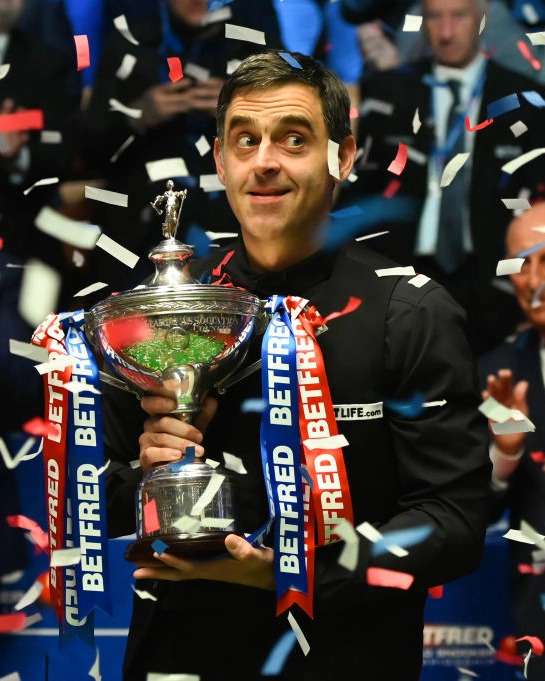
A serious player benefits from expert instruction that explains not only what to practise, but why it belongs at that stage of development. The Rocket Method brings that framework together through nearly 12 hours of cinematic instruction from Ronnie O’Sullivan, supported by Alan McManus. It is built for players who want direct access to championship-level thinking, from technical foundations to break-building, tactical awareness and the mindset required to compete.
The value of a complete course is continuity. Instead of collecting fragments of advice and hoping they fit, you can follow a coherent progression, revisit key lessons and apply them at the table at your own pace. For beginners, that means starting correctly. For experienced players, it means identifying the gaps that have held their game in place.
A structured snooker learning path is not a promise that every session will feel easy. Some changes feel awkward before they become reliable, and progress rarely moves in a straight line. What it does provide is a standard: practise with intent, measure the right things, and let each improvement earn the next. The next time the frame turns on a difficult black, you will have more than hope to rely on.