A missed black in a close frame is rarely caused by a lack of enthusiasm. More often, it exposes a cue action that changed under pressure, a rushed decision, or a habit that has been repeated so often it now feels normal. That is the real question behind snooker lessons versus solo practice: not which option sounds more committed, but which one helps you identify and correct the things costing you frames.
For most players, the strongest answer is not an either-or choice. Lessons provide direction and accountability; purposeful practice turns that direction into a dependable game. The balance depends on where you are now, how clearly you understand your faults, and whether you can access coaching that genuinely improves your fundamentals.
What snooker lessons give you that practice cannot
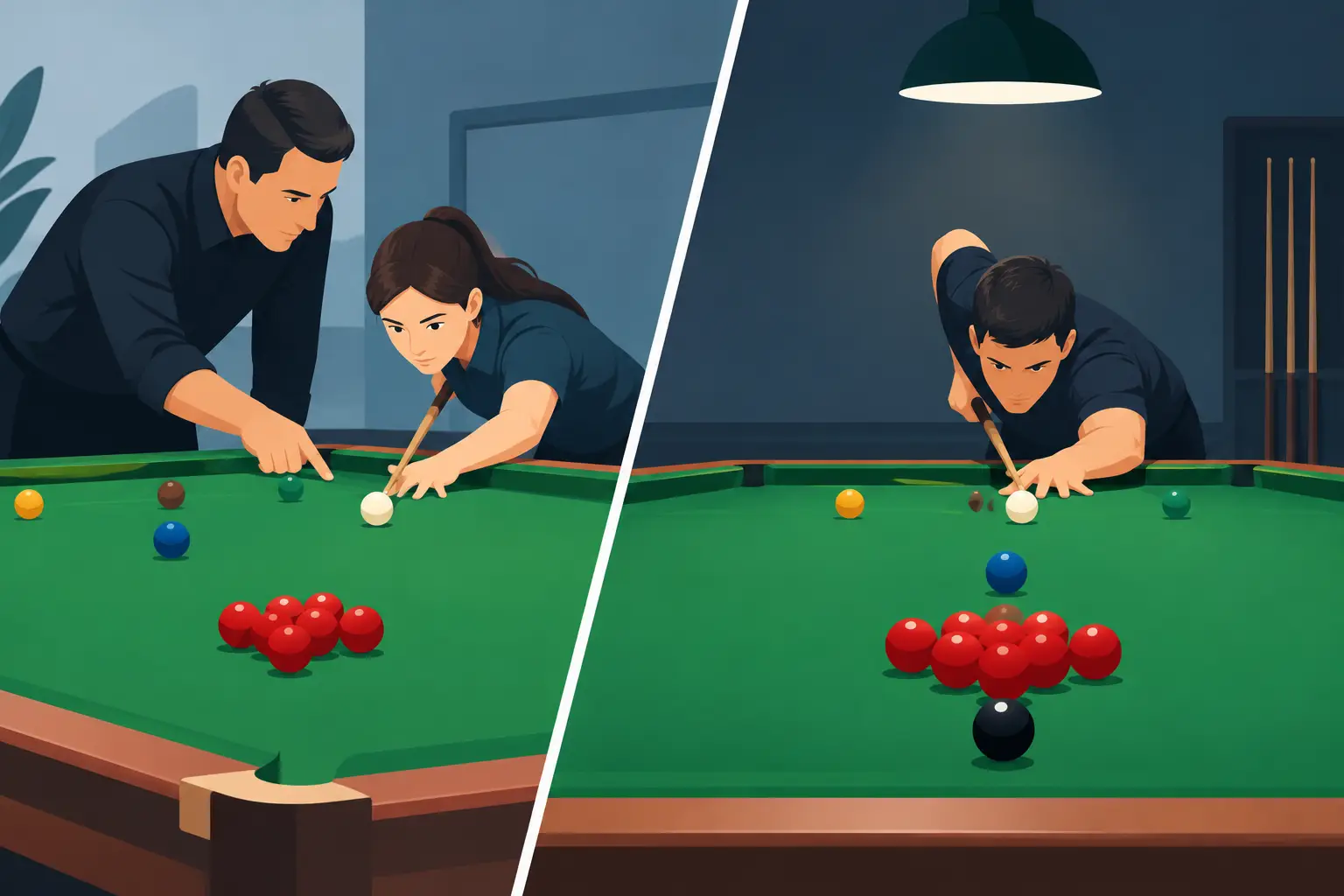
A good coach sees the shot before the cue strikes the ball. They can spot a grip tightening on the backswing, a head lifting fractionally early, or an alignment routine that starts differently every time. Those details are difficult to diagnose from behind your own cue.
That outside perspective matters because snooker is full of compensations. You may pot a ball despite standing poorly, steering the cue, or dropping your shoulder. If the ball goes in, it is tempting to assume the method worked. A coach separates outcome from process. They help you understand whether the shot was struck well enough to repeat when the score matters.
Lessons also impose an order on improvement. Rather than spending an hour attempting difficult long reds because they feel productive, you can work through the foundations: stance, sighting, cue delivery, timing, screw control, positional routes and safety choices. Each layer supports the next.
For a beginner, this can prevent months of reinforcing a weak setup. For an experienced club player, it can expose the reason a break stalls in the 20s or why long potting disappears after the first missed chance. The best instruction does not simply provide a tip. It gives you a clear priority, explains why it matters, and shows you what good feels like.
The limits of live coaching
Not every lesson is equal. A coach may be excellent but unavailable locally, and regular one-to-one sessions can be expensive. A single lesson can also create a false sense of progress if you leave with five thoughts in your head and no plan for the next six hours at the table.
There is another practical issue: players need time between lessons to make changes their own. Technical advice can feel awkward before it becomes natural. If you book coaching repeatedly without practising with discipline, you risk becoming dependent on feedback rather than learning to assess your own game.
What solo practice does better
Solo practice gives you the repetitions that no lesson can supply. A sound cue action is not built by hearing the right explanation once. It is built by settling into the shot the same way, delivering the cue straight, and recognising the difference between a clean strike and a forced one – hundreds and then thousands of times.
It is also where you learn to manage a frame. On your own, you can place a red in an awkward position and practise the response: attack, contain, or play safe. You can repeat a black-spot routine until speed control becomes more reliable, then recreate the same positional challenge from several angles. This is the work that makes knowledge usable.
The freedom is valuable too. You can practise at your own pace, spend twenty minutes on one uncomfortable shot, and return to it again tomorrow. There is no pressure to impress a coach or justify the time. For committed players, that consistency is a major advantage.
The danger is vague practice. Simply knocking balls around is enjoyable, but it often rewards the shots you already like and avoids those that reveal a weakness. You finish feeling busy without collecting evidence that your game is improving.
Turn table time into training
A productive solo session needs one technical focus and one measurable task. For example, spend the first part of a session checking that your grip, bridge and cueing rhythm remain consistent on straight blue-to-middle pots. Then set a scoring challenge involving a red, a colour and a controlled leave for the next red.
Keep the target demanding but realistic. If you miss a positional zone, do not merely reset the balls and hope for better. Ask what caused the error. Was the contact point wrong, was the pace excessive, or did you choose the wrong side of the colour? That short review develops the judgement many players neglect.
Record occasional footage from directly behind the cue and side-on, if club rules permit. Video is not a replacement for qualified instruction, but it can reveal whether your pre-shot routine and cue delivery look as repeatable as they feel. Use it to check one change at a time, not to analyse every movement into paralysis.
Snooker lessons versus solo practice: the deciding factor
The deciding factor is the quality of your feedback loop. Improvement accelerates when you can identify a weakness accurately, practise the right correction, and test whether it survives under a little pressure.
Lessons are most valuable when you are uncertain what is wrong, stuck at a plateau, returning after a long break, or preparing for competitive play. They give you trusted diagnosis and a training route. Solo practice is most valuable when you already have a clear focus and enough table time to turn it into automatic behaviour.
Consider the player who misses long pots to the right. Alone, they may assume the issue is aim and spend weeks changing their line of sight. An experienced instructor might see that the cue is being pushed across the line through impact. The fix is not magical, but finding the real cause early saves a great deal of frustration.
Now consider the player who has received sound advice on a smoother delivery. No coach can install that delivery for them. They need deliberate repetitions, simple drills and enough patience to avoid abandoning the change after two poor sessions. That is where solo work earns its place.
A stronger route for different players
If you are new to snooker, seek quality instruction early, whether through a capable local coach or structured teaching from proven professionals. Your first aim is not to copy a professional’s flair. It is to establish a stable stance, an honest line of aim and a cue action that gives the ball a fair chance.
If you are a regular recreational player, use occasional expert input as a checkpoint rather than waiting until your game feels broken. Then give yourself a focused block of solo practice. A useful rhythm might be instruction, several weeks of targeted table work, then a review of what has held up and what has not.
If you compete, practise with consequences. Set scoring targets, limit your attempts, and include safety exchanges as well as potting drills. Match pressure does not arrive because you have played more balls. It arrives when each shot has a purpose and a cost.
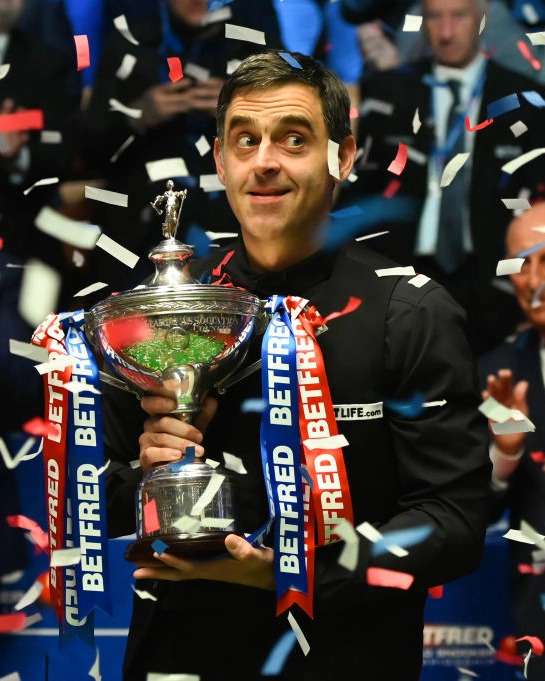
For players without access to regular face-to-face coaching, a complete, structured digital course can be a more practical alternative to fragmented advice. The Rocket Method brings Ronnie O’Sullivan’s approach to technique, shot-making, tactics and mindset into a coherent training resource, allowing you to revisit key lessons as your understanding develops. It is not a substitute for table time. It is a way to ensure that table time has direction.
Do not confuse confidence with progress
Some sessions feel brilliant because the balls are going in. Others feel poor because a technical change has made your rhythm less familiar. Neither feeling is a reliable verdict on its own.
Track a few useful measures over time: how often you complete a routine cleanly, whether your positional errors are reducing, how well you recover after a miss, and whether your decisions improve when the easy pot is not available. These are signs of a game becoming more complete, not merely more entertaining on a good day.
The player who improves fastest is usually not the one who chooses lessons or practice as rival camps. It is the one who earns expert guidance when it matters, then returns to the table with a precise intention. Give every practice session a question worth answering, and let the answer shape the next frame.