A cue can feel perfectly straight in practice and disappear the moment a meaningful red is on offer. That gap is where amateur cueing progress is won or lost. Better cueing is not about producing one beautiful delivery when nobody is watching. It is about building an action you can trust when the score matters, the table is awkward and your mind is trying to interfere.
For most club players, progress does not begin with a dramatic technical overhaul. It begins with removing the small movements that send the cue off line: a rushed approach, a head that lifts early, an unstable bridge hand or a grip that tightens at the point of contact. The standard is simple. Your cue should travel through the ball as straight and as freely as your intention.
Why your cueing has plateaued
Many amateurs practise outcomes rather than actions. They pot a few balls, miss a few more, then judge the session by the final tally. That tells you whether a ball dropped, but not why it missed. A player can pot an object ball with a poor delivery because the shot is forgiving. The same fault becomes exposed on a long red or a thin cut under pressure.
The most common plateau comes from inconsistency before the cue even starts moving. If your feet, body line, bridge length and head position change from shot to shot, your brain has to solve a new problem every time. Talent can compensate for that on easy balls. It cannot create dependable scoring.
There is also a trade-off worth understanding. A technically neat action that feels stiff and overcontrolled is not the goal. Nor is a loose, instinctive swipe that occasionally looks brilliant. The best cue action is organised enough to be repeatable and relaxed enough to flow. That balance takes patient, specific work.
Amateur cueing progress starts before the backswing
A straight cue delivery is largely prepared during your approach to the shot. Once you are down, there should be very little left to decide.
Find the line with your feet
Stand behind the shot long enough to see the route from cue ball to object ball and on towards the pocket. Then step into that line deliberately. Your body does not need to look identical to another player’s, but it must allow your cue arm to swing without being forced around your hip or chest.
Avoid dropping into the stance from the side and making a last-second correction with the cue. This is a familiar amateur habit, particularly when the player is eager to get down quickly. Take an extra second. A clear approach is faster than standing up to start again after a miss.
Build a stable bridge
Your bridge hand is the front rail of the cue. If it moves, the cue has no stable channel. Plant it with enough pressure that it will not slide during the stroke, while keeping the fingers and wrist free of needless tension.
Bridge length depends on the shot and your physical build, but constant changes make feel harder to develop. For routine cueing, choose a length that gives the cue room to travel while keeping your hand firm and your vision comfortable. Shorten it only when the shot, the rest position or the cue-ball contact genuinely demands it.
Let your cue arm hang naturally
At the address position, your forearm should be able to move like a pendulum rather than being pulled inward or pushed outward. Do not chase a textbook shape at the expense of comfort, but do notice whether your elbow is being forced into an awkward path.
A useful check is to make several slow practice strokes while watching the cue pass over your bridge. If the butt wanders sideways, identify the cause before blaming your aim. It may be your stance line, a crowded grip position or tension in the shoulder.
Make the delivery quieter
Good cueing rarely looks busy. The head stays still, the bridge stays firm and the grip hand allows the cue to do its job. The cue moves, not the whole player.
The grip is often the fastest place to find unnecessary tension. Hold the cue securely enough that it does not feel unstable, but never squeeze it as though you are trying to steer the white. A tightening hand can twist the cue, shorten the follow-through and make pace control unreliable. This becomes more obvious when screw, stun or side is introduced.
Your practice swings should have a purpose. Use them to feel the line, assess the required pace and settle your rhythm. Endless feathering does not make a shot safer. At some point, it creates doubt. When the picture is clear, pause, settle and deliver.
Keep your head down through the strike. This does not mean freezing yourself into discomfort. It means allowing the cue ball to leave before your eyes chase the object ball. Players who lift early often swear they have hit the cue ball cleanly. Video tells a more honest story.
Practise the action, not just the pot
A long straight black can be an excellent test, but it is not enough on its own. Deliberate cueing practice should give you feedback on direction, contact and control.
Start with a simple line-up: place the cue ball close to the baulk cushion and an object ball on a direct line to a middle or corner pocket. Use a gentle pace and aim to send the cue through the centre of the white. Do not rush to make the ball more difficult. First, prove that your cue can return along the same line repeatedly.
Next, add a finishing position. After each shot, remain down and notice where the cue tip finishes. Has it travelled straight? Has the grip hand tightened? Did your head move? This turns every repetition into information instead of a guess.
For a more demanding drill, play a straight pot with the instruction that the cue ball must finish dead or within a small chosen area. Now you are testing both line and strike. If the object ball goes in but the cue ball drifts off line, the delivery may not be as clean as it appeared.
Record a short video from directly behind the cue, then from the side. It can feel uncomfortable at first, especially when the picture contradicts what you thought you were doing. That discomfort is useful. A visible fault can be worked on; an imagined one usually sends players chasing the wrong solution.
Pressure exposes the weak link
You do not need a crowd to practise pressure. Give your routine consequences. Set a target of ten successful straight pots in a row, with the cue ball stopping in a defined zone. Miss, and begin again. The aim is not to punish yourself. It is to discover whether your pre-shot routine remains intact when the next ball begins to feel significant.
When nerves arrive, resist the urge to add more moving parts. Do not suddenly change your grip, add extra practice strokes or try to hit the ball harder. Return to the same sequence: see the line, step in, settle, deliver. Pressure rewards players who can trust a familiar process.
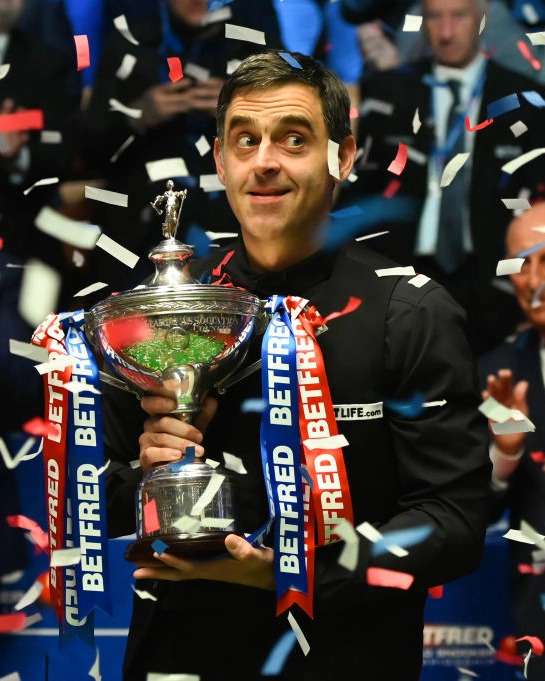
This is one reason elite instruction is so valuable. Watching Ronnie O’Sullivan explain the relationship between freedom, rhythm and decisive shot-making gives amateur players a clearer standard than scattered advice ever can. At the table, though, insight only becomes progress when it is turned into a repeatable habit.
Measure improvement honestly
Do not judge your cueing by your best frame of the week. Judge it by the quality of your routine over a month. Are you standing up less often? Is your cue ball finishing closer to where you planned? Are long pots feeling like normal shots rather than events? Those are meaningful signs that your action is becoming more dependable.
Keep a brief practice note after each session. Record one technical focus, one shot that exposed it and one improvement you noticed. Avoid changing five things at once. If your bridge is unstable, work on the bridge. If your grip tightens, work on the grip. A single clear priority gives your nervous system a chance to learn.
There will be sessions when the balls refuse to drop despite a sound action. That is part of snooker. Do not abandon a better process because of a bad hour. A repeatable cue action is built when you continue to respect the fundamentals, particularly when the table gives you no immediate reward.
The next time a crucial long red appears, give yourself the chance to play it properly. Set the line, trust the preparation and let the cue travel. That quiet, committed delivery is where better scores begin.