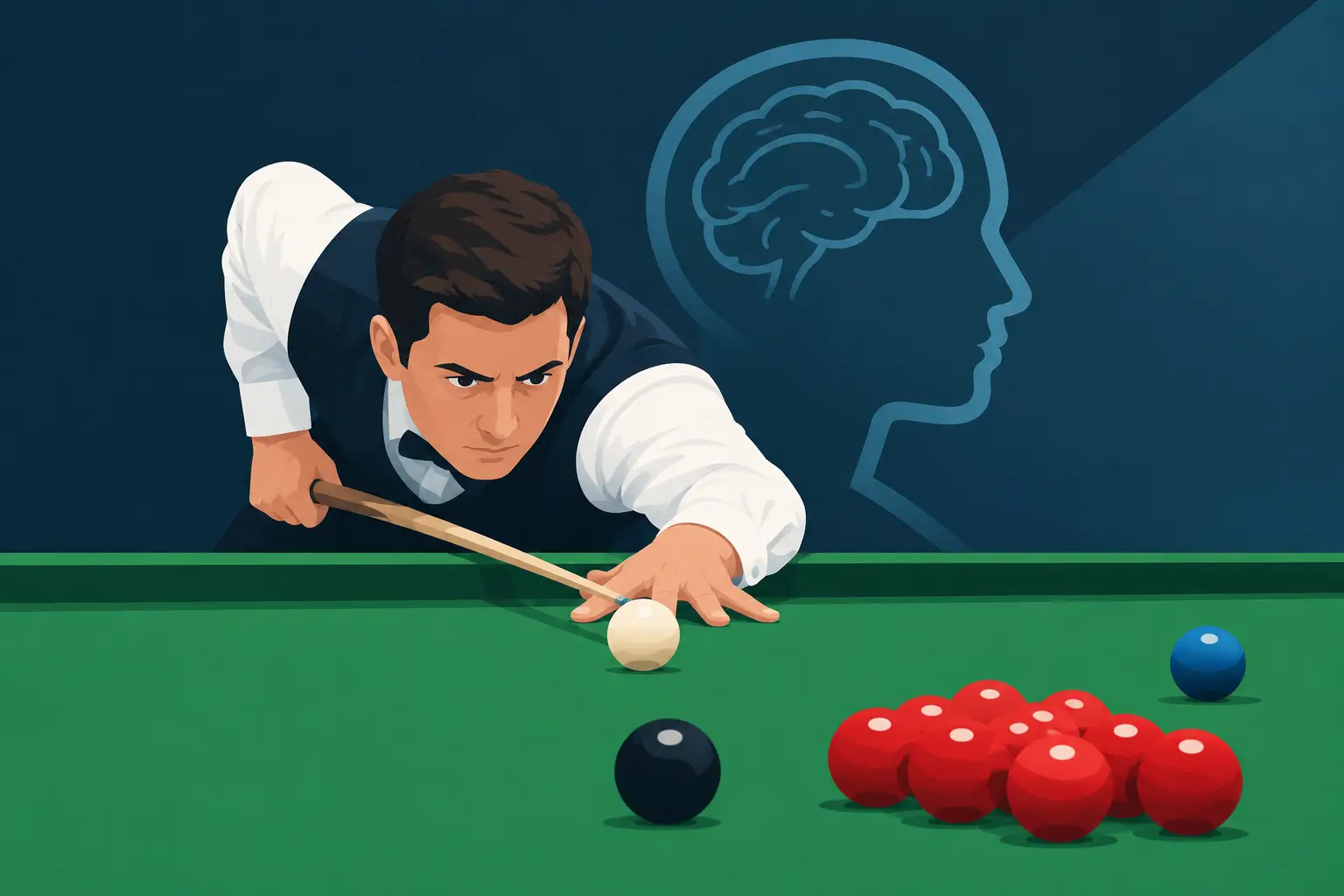
A black off its spot can feel routine in practice and strangely awkward in a deciding frame. The table has not changed. The cue has not changed. What changes is the mental approach to snooker: the ability to see the shot clearly, commit to it fully and accept the result without allowing one moment to infect the next.
At club level, players often look for a technical fix when their scoring falls away under pressure. Sometimes technique is the issue. Often, though, a player who pots freely alone is trying to control the outcome rather than execute the process when it matters. The best standard is not feeling calm all the time. It is having a repeatable response when you do not.
Mental approach to snooker starts before the shot
Confidence is not a mood you wait for. It is evidence collected through preparation. When you know your stance, cue action and pre-shot routine have been practised with purpose, you have something more reliable than hope to take into a match.
That does not mean turning snooker into a rigid ritual. A routine should settle your attention, not become another source of anxiety. The useful question before every shot is simple: what does this ball require? Assess the line, select the pace, identify the cue-ball route, then step in with a clear decision. Once you are down on the shot, analysis is over.
Indecision is expensive. A player who changes their mind while feathering the cue may still pot the ball, but they have introduced tension and hesitation into the delivery. If a shot genuinely needs reconsidering, stand up, reset and make the decision again. There is no prize for staying down while your mind is elsewhere.
Build a pre-shot routine that holds up
A good routine gives each shot a beginning, middle and end. It is the bridge between tactical thought and free cueing. You do not need to copy another player’s mannerisms, but you do need a sequence you trust.
Start behind the line of the shot. Look at the object ball and pocket, then picture the cue ball arriving at its next position. Be realistic about the percentage. A difficult long red with no clear route afterwards may be a poor choice, even if you fancy making it. Good mental discipline includes choosing the right shot, not merely being brave enough to attempt every one.
As you approach the table, let the decision become quieter. Your eyes, bridge hand and cue alignment should be doing familiar work. Use a final pause before delivery to confirm that you are still balanced and still committed. Then cue through the ball. Trying to steer the object ball into the pocket is a common response to pressure, and it usually produces exactly the contact you were trying to avoid.
After the shot, stay down briefly. This is not theatre. It encourages a complete delivery and gives your brain one clear action to repeat. Whether the ball goes in or stays out, assess the process before judging yourself.
Separate the shot from the score
Scoreboard awareness has a place. In a tactical frame, you must know the difference, the balls remaining and the value of safety. But when the player begins calculating consequences during the stroke – ‘If I miss this, I lose’ – attention leaves the cue ball.
Bring your focus back to controllables: your breathing, your tempo, your line of aim and the chosen pace. The frame is won through one decision at a time. No player can pot the next five balls in a single stroke; they can only give the current ball their full attention.
This matters most when you are close to a milestone. A first century, a personal best break or a chance to beat a stronger opponent can make a straightforward colour feel oversized. Acknowledge the moment without dramatizing it. The table does not care what the break represents. The shot remains a line, a contact point and a cue-ball requirement.
Some players benefit from one short cue word, such as ‘smooth’ or ‘through’. Keep it practical rather than emotional. ‘Do not miss’ invites fear into the routine. ‘Smooth’ directs attention to delivery.
Pressure is information, not a warning sign
A faster heartbeat, dry mouth or restless hands are normal signs that the occasion matters. The mistake is treating those sensations as proof that you are about to fail. Professionals feel pressure too. Their advantage is that they do not negotiate with it on every visit to the table.
Use your breathing to slow the rush. Between shots, take a longer exhale than inhale and let your shoulders drop. There is no need for elaborate performance psychology beside the table. One controlled breath can stop a hurried walk, a rushed safety or an impulsive pot attempt.
It also helps to accept that pressure may slightly change your perception. Pockets can appear tighter; the cue ball can seem to travel too quickly. That is precisely why simple choices become valuable. When the frame is tense, favour a percentage route, leave an angle you can read and resist forcing low-percentage positional shots merely to prove you can play them.
There is a trade-off. Excessive caution can hand initiative to an opponent, particularly when an attacking chance is genuinely on. The answer is not to become timid. It is to judge aggression by the table, your strengths and the match situation, rather than by adrenaline.
Recover quickly after a miss
Every player misses. The difference between a single error and a damaging spell is often the reaction that follows it. Slumped shoulders, a sharp word under the breath or replaying the miss while your opponent is at the table all spend energy on something finished.
Create a reset action. It might be placing the cue in your hand a particular way, taking one breath as you return to your chair or making a brief factual note in your mind: ‘I decelerated.’ Keep the assessment neutral and specific. ‘I am hopeless under pressure’ teaches nothing. ‘I lifted my head early’ gives you a useful point for the next opportunity.
Then watch the opponent with purpose. Their visit tells you what may be left, where the tactical battle is moving and whether an opening could return. You are not waiting for a mistake as a passive spectator. You are staying in the frame.
Avoid trying to repair a miss with a spectacular shot at the first opportunity. That urge is understandable, especially against a player you want to impress, but it can turn one lost chance into several. Re-enter the frame intelligently. A well-weighted safety can be the most confident shot you play.
Train your mind in practice, not only in matches
If every practice session is a relaxed potting session, match pressure will always feel unfamiliar. Add consequences without making practice joyless. Set a target score, play a best-of-five against a friend, or give yourself one chance to clear a simple layout after a safety exchange. The purpose is to practise your routine when an outcome matters.
Keep a short practice record. Note not only breaks and pot success, but moments where your decision-making was strong: choosing the right safety, standing up when uncertain, or resetting well after a miss. This builds a more accurate version of confidence than simply remembering the balls that went wrong.
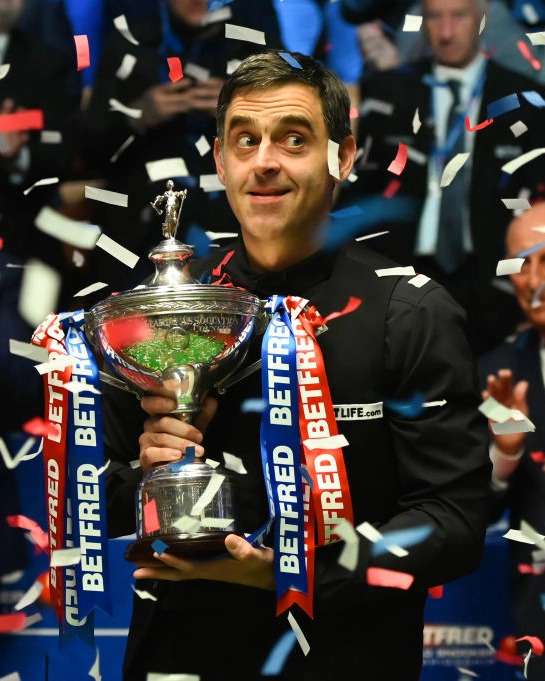
Video instruction can be valuable here because mindset is connected to every technical and tactical choice. The Rocket Method, taught by Ronnie O’Sullivan, places elite thinking alongside cue action, shot selection and match awareness – the areas that turn knowledge into performance when the frame tightens.
Let the table demand your attention
The strongest mental approach to snooker is not about pretending the nerves are absent or repeating grand statements before a match. It is quieter than that. It is the habit of preparing well, choosing clearly, cueing with commitment and returning to the present after every result.
Next time the decisive ball arrives, do not ask whether you feel ready. Stand behind it, read it properly and give the shot the same honest routine you have earned in practice. That is how composure becomes part of your game.