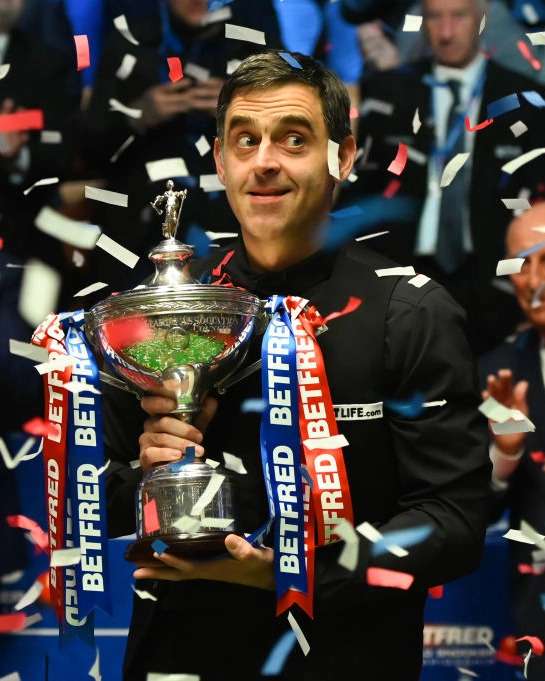
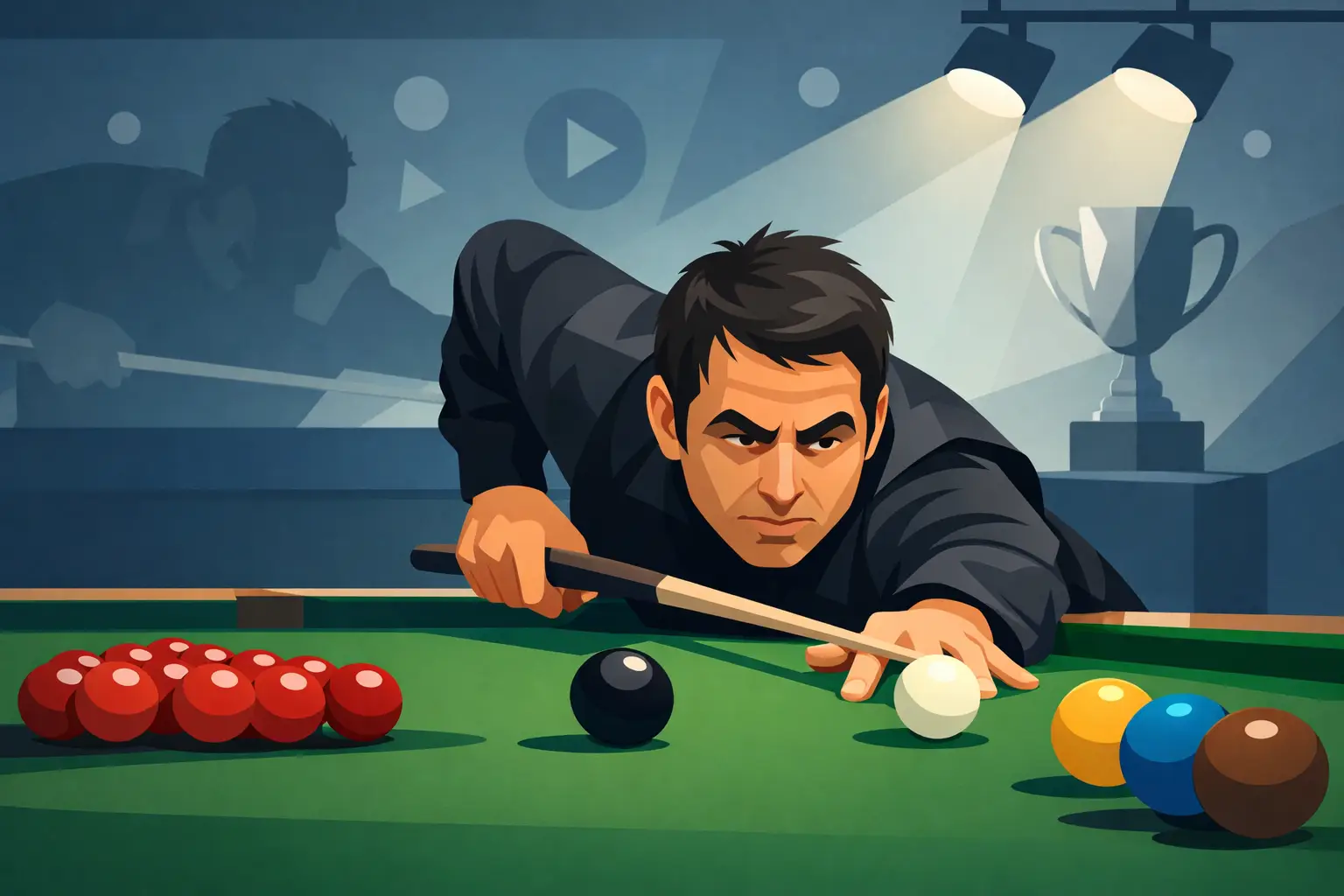
Most snooker players do not lack advice. They lack a reliable system. One video tells you to cue straighter, another says to change your grip, and a well-meaning player at the club offers a fix that works for them but not necessarily for you. This Ronnie O’Sullivan masterclass review looks at whether learning from the game’s greatest natural talent can turn that noise into a clearer route to better snooker.
The short answer is that this is not a collection of celebrity clips or a highlight reel with a few coaching tips attached. It is a serious, structured course built around the technical, tactical and mental standards that made Ronnie O’Sullivan the sport’s defining player. Across 12 episodes and nearly 12 hours of instruction, he explains the parts of the game that recreational players repeatedly struggle to build on their own: a dependable action, better shot selection, stronger break-building habits and a calmer approach under pressure.
What the Ronnie O’Sullivan Masterclass Covers
The course begins where meaningful improvement should begin: with the fundamentals. Ronnie addresses stance, alignment, cue action, grip, bridge hand and delivery in a way that makes the game feel less mysterious. The value is not simply seeing a textbook position. It is hearing why each element matters, how the pieces work together and what he is trying to feel at the table.
That distinction matters. A player can copy a professional’s appearance and still miss the reason their action breaks down under pressure. Ronnie’s teaching consistently comes back to rhythm, freedom and simplicity. He does not present snooker as a set of rigid poses. He shows how sound basics create the freedom to play naturally when the score matters.
From there, the teaching moves into practical scoring. Potting is only one part of compiling a break. The course gives proper attention to cue-ball control, routes through the colours, pace, angles and the choices that keep a visit alive. For players who can make individual pots but regularly lose position, this is where the material becomes particularly valuable.
Safety, tactical awareness and matchplay thinking are not treated as afterthoughts either. Strong club players often plateau because they focus almost entirely on making balls. Ronnie explains the professional habit of assessing risk, recognising the right moment to attack and leaving opponents with awkward decisions when a pot is not on. These are the margins that turn a promising frame into a winning one.
Why Learning From Ronnie Is Different
Plenty of coaches can explain a technique. Very few can explain how the game feels from the position Ronnie O’Sullivan has occupied for decades: competing for the biggest titles, producing under intense scrutiny and finding solutions at a pace no other player has consistently matched.
His authority is obvious, but the most useful aspect is his directness. Ronnie does not overcomplicate the game to make it sound exclusive. He returns to repeatable principles: see the line clearly, commit to the shot, deliver the cue smoothly and think one or two balls ahead. For a beginner, that clarity prevents bad habits becoming deeply ingrained. For an experienced amateur, it can expose the small compromises that have been holding progress back for years.
Alan McManus adds another important dimension. His contribution gives the course the perspective of an elite professional and respected analyst who understands how to translate high-level ideas for the wider game. The conversations and demonstrations help connect Ronnie’s instincts to practical decisions a player can take into their next practice session.
The production also deserves mention. This is filmed as a premium masterclass rather than a set of casually recorded lessons. Clear camera work matters in snooker, where a slight change in cueing line, body position or contact point can make the difference between understanding and merely watching. The cinematic quality gives the instruction the attention it deserves without getting in the way of it.
Who Will Get the Most From It?
This course is designed broadly enough for a new player, but it is not only for beginners. Its greatest strength is that the same lesson can offer a different benefit depending on your level.
A beginner gets a far better foundation than the usual trial-and-error route. Instead of building a stance around comfort alone, they can understand alignment early and practise with a purpose. That can save months of frustration, particularly for players who have started enjoying the game but do not know how to make their improvement consistent.
The regular club player may find the biggest immediate gains. If you can pot confidently but miss too many routine balls, lose the cue ball after two or three colours, or allow one poor safety to cost a frame, the course gives structure to those weaknesses. It helps replace vague ambitions such as “play better position” with specific work on speed control, routes and decision-making.
For serious recreational competitors, the appeal is the professional mindset. At that level, technique is rarely the whole story. You need to manage nerves, reset after mistakes and choose percentage shots when the tempting pot could leave the frame exposed. Ronnie’s experience gives those subjects weight because his advice comes from the sport’s highest-pressure environments.
Fans of Ronnie will naturally enjoy the access to his philosophy, but the course earns its place only if you are prepared to practise. Watching the greatest player of all time cannot substitute for time at the table. It can, however, ensure that your practice is focused on the right things.
The Real Trade-Off: Course Versus Personal Coaching
A fair Ronnie O’Sullivan masterclass review should be clear about what an online course can and cannot do. It cannot stand behind you, spot that your elbow is drifting, or tailor a correction to your exact physical build in real time. If you have a major technical fault or are preparing for high-level competition, individual coaching can be invaluable.
Yet one-to-one coaching is not always available, affordable or consistent. Many players have limited local options and end up relying on fragmented clips, conflicting opinions and whatever they happen to remember from the previous session. A comprehensive course gives you an elite reference point that you can revisit whenever a part of your game needs attention.
That lifetime access is a meaningful advantage. Snooker improvement is not linear. You may watch the sections on break-building when you first enrol, return to fundamentals after a difficult month, then revisit tactical play before a league match. A subscription can create pressure to consume content quickly. A one-off purchase lets the course remain part of your training over time.
The sensible approach for many players is to use the masterclass as the framework, then add occasional table-side coaching if needed. You arrive at any coaching session with better questions, a clearer understanding of your own game and less risk of paying simply to be told the basics you could have learned properly at home.
How to Get Results Rather Than Just Watch
The difference between entertainment and training is what happens after the screen goes off. Do not try to absorb nearly 12 hours in a weekend and expect your cue action to transform. Choose one area, watch it carefully, then take it to the table for several sessions.
If your long potting is unreliable, begin with alignment and delivery rather than endlessly setting up difficult reds. If your breaks die early, work on simple colour-to-red patterns and controlled cue-ball speed before attempting ambitious recoveries. If matches slip away after an error, focus on the safety and decision-making lessons instead of blaming your temperament.
Record a few practice sessions from the front and side. The camera is not there to criticise you. It is there to show whether your feeling matches reality. Compare your movement against the principles taught in the course, make one adjustment at a time and give it enough repetitions to settle.
The Rocket Method is strongest when treated as a training standard, not a quick fix. Ronnie’s game looks effortless because the foundations are deeply embedded. The goal is not to copy every mannerism of a once-in-a-generation player. It is to build a game that is more reliable, more intelligent and more composed under your own pressure.
Is It Worth It?
For anyone seeking a few instant tricks, probably not. Snooker has no shortage of short-form tips, and this course asks for more attention than that. Its value lies in bringing the game together: technique supports cue-ball control, cue-ball control supports break-building, and tactical discipline protects the frames where scoring is not possible.
For committed beginners, ambitious amateurs and players who have reached a frustrating plateau, it is hard to think of a more credible digital learning experience. You are getting structured instruction from Ronnie O’Sullivan, supported by Alan McManus, presented at a level that respects both the sport and the player watching it.
Give the lessons the same seriousness you would give a practice table. Pick the part of your game that costs you most often, work on it patiently, and let each improvement earn the next one.