A good pot gives you one point. Good positional play gives you a break. This snooker positional play guide is about the skill that separates a player who occasionally makes a ball from one who makes the table look manageable, shot after shot.
At club level, many missed breaks are not caused by a difficult red or a flawed cue action. They end because the cue ball has been left on the wrong side, with too much angle, too little room, or no simple route to the next colour. The answer is not to strike every ball harder or add more side. It is to see the next two shots before you address the first one.
Positional play starts before the cue moves
The highest-quality positional players do not simply ask, “Can I pot this?” They ask, “Where must the cue ball finish for the next scoring shot, and what pace gets it there?” That distinction changes everything.
Before every attacking shot, identify a target area rather than an exact pin-point spot. On a full-size table, chasing a coin-sized landing zone creates tension and encourages forced cue-ball manipulation. A useful target zone gives you margin for error. If the next red can be potted from several inches of table, plan to arrive in that area rather than demanding perfection.
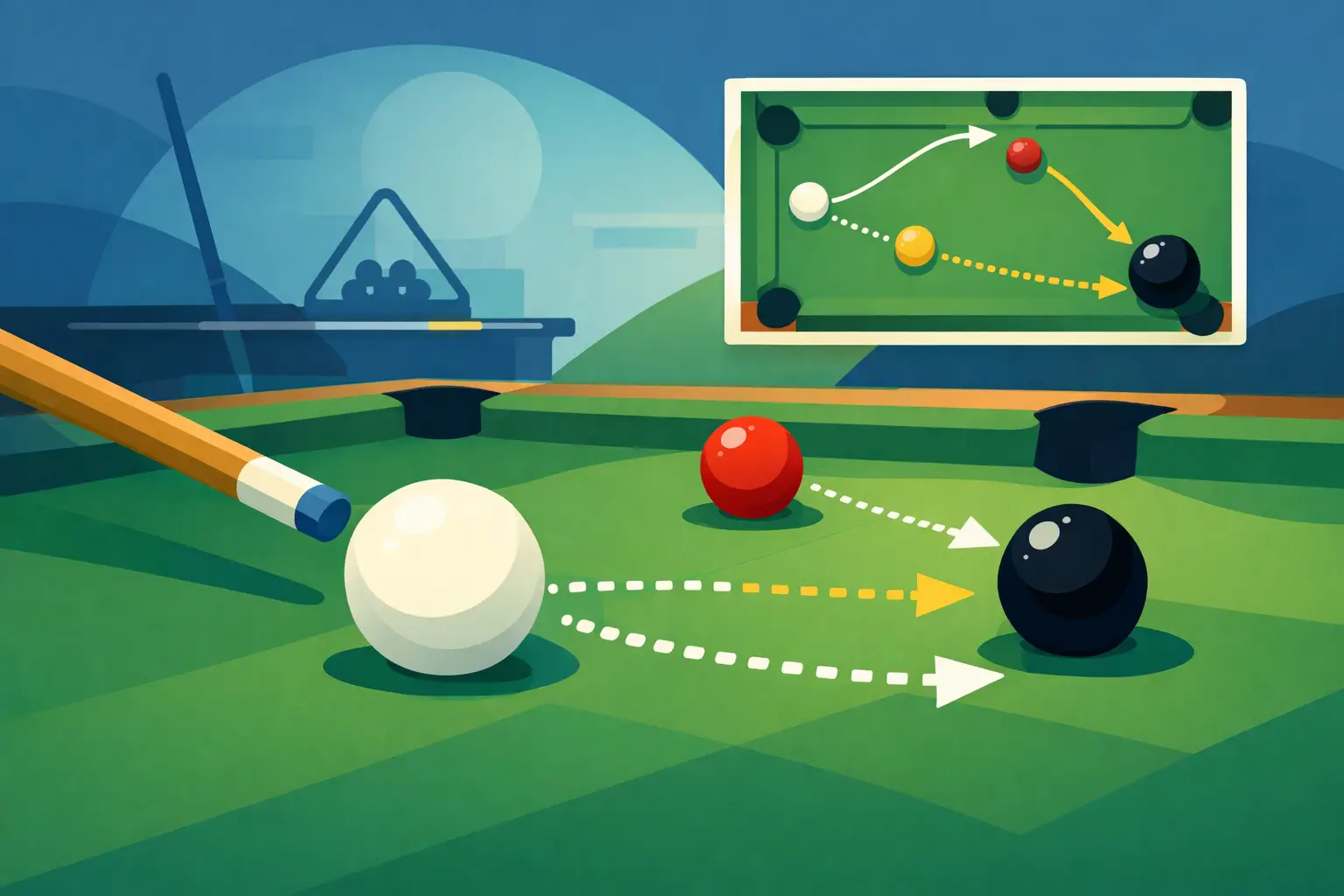
Then work backwards. Picture the next object ball, the pocket you intend to use, and the line from cue ball to object ball. This is your positional line. Your job on the current shot is to send the cue ball into a useful area that gives you an acceptable angle across that line.
The best position is rarely dead straight. A slight angle is often better because it lets you move naturally to the next ball. Dead straight can leave you with no route at all, particularly when you are working through a cluster of reds below the black. The question is not whether straight is ideal. It is whether the angle you leave creates a simple, controlled next shot.
The snooker positional play guide to cue-ball routes
There are usually several ways to reach the same area. The intelligent choice is the route with the largest margin, not the most spectacular route.
A natural rolling path should be your first option. If a plain stun or gentle screw shot brings the cue ball into position, there is little value in forcing three cushions with side. More rails, more pace and more spin all introduce variables. Elite players use those options when the table demands them, not because they look advanced.
Use the simplest available route
When choosing a route, consider three things: distance, traffic and pace. A shorter path is generally easier to judge. A route that avoids other reds reduces the chance of a kiss. And a route played at a controlled speed is more repeatable than one requiring the cue ball to travel at full pace.
For example, after potting a red to the middle, a gentle stun to hold for the black may be preferable to drawing the cue ball back towards the baulk end for the blue. The black offers more points and, if it keeps the cue ball in the scoring area, it protects the break. But this depends on the table. If the black is tied up or the path is crowded, the blue may be the more professional choice.
Position is not about insisting on the highest-value colour. It is about selecting the colour that keeps the break alive.
Understand the cue ball’s natural behaviour
A cue ball struck above centre rolls forward after contact. A stun shot, played close to centre with a firm enough delivery, tends to travel along the tangent line. A screw shot sends the cue ball backwards before it settles into a forward roll. These are not isolated techniques. They are your positional vocabulary.
Learn to predict each one without guesswork. On a simple red-to-black pattern, practise potting the red with top, stun and screw from the same starting position. Watch where the cue ball finishes, then adjust only the contact point or pace. This gives you a clear feel for what changes the route and what changes the distance.
Side can be valuable, especially when cushions must be used or when you need to avoid a blocker. Yet it should be added with a reason. Side affects not only the rebound from a cushion but also the throw on the object ball and the accuracy of your delivery. If centre-ball or a small amount of top achieves the same position, that is normally the higher-percentage choice.
Pace control is the foundation of reliable position
Players often focus on where to hit the cue ball and overlook how hard to strike it. In reality, pace is frequently the deciding factor. The correct route played at the wrong speed is still poor position.
Think of every positional shot as having an arrival speed. Do you want the cue ball to stop in a zone, roll through it, or reach a cushion and return? Decide this before stepping into the shot. Once you are down on the ball, your attention should be on a smooth delivery, not last-second calculation.
Soft shots demand commitment. Decelerating through the cue ball is one of the quickest ways to under-hit position and miss the pot. Deliver the cue straight, with a positive but measured follow-through. Firm shots require the same composure. Do not jab at the ball because you need it to travel. A longer, cleaner cue action gives you both pace and accuracy.
A practical test is to place the cue ball near the blue spot and roll it towards the top cushion, trying to finish within a hand’s width of it. Repeat from different positions. This may look basic, but it teaches touch more effectively than endlessly attempting difficult recovery shots.
Build breaks in zones, not single shots
When the reds are open, strong break-building becomes a matter of staying in the right part of the table. Usually, that means keeping the cue ball in the black, pink and blue zone while maintaining access to the next red.
Do not drift into a corner of the table simply because one red is available. A red near a cushion may pot cleanly, but if it leaves you no colour or forces a long recovery route, it may be a poor break shot. Look for reds that preserve options. The more pockets available after your colour, the less pressure you place on the next positional shot.
This is especially important around the pink. The pink can be the ideal colour for keeping the cue ball central, but careless position near its spot can leave the cue ball trapped behind reds or awkwardly close to a blocking ball. Give yourself room to cue. A slightly longer pot with a clear path is usually preferable to an easy pot played from a cramped, restricted stance.
Plan for the problem ball early
Every developing break has a ball that threatens to stop it: a red on the cushion, a tight cluster, or a colour blocked from its usual pocket. Spot it early. You do not always need to attack it immediately, but you should know how and when it will be dealt with.
The mistake is waiting until only one red remains and then attempting a forced split from a poor angle. Better players open clusters when they have insurance. That means a red available after the cannon, a colour in view, and a cue-ball route that does not leave them stranded.
When splitting reds, control matters more than violence. A light, well-judged cannon that creates two new potting options is often better than scattering the pack and losing the cue ball. The purpose of a split is to improve your next shot, not simply to make the table look open.
Make your safety game part of your positional thinking
Positional play does not end when the pot is difficult. If you cannot guarantee the next scoring opportunity, switch your thinking from break-building to table control.
A low-percentage long pot can be tempting when you are a few balls into a break. But if the cue ball is likely to finish open and the object ball can remain available, the cost of missing is high. A considered safety that leaves the cue ball tight on a cushion or behind a colour may be the shot that wins the frame.
This is not negative snooker. It is disciplined snooker. The strongest players know when an attacking chance has become a gamble. They protect their score, make the opponent work, and wait for the next genuine opening.
Practise position with a clear score
Randomly knocking balls around builds enjoyment, but structured practice builds repeatable decisions. Set simple challenges and keep a score. Pressure arrives when a shot matters, even if the consequence is only starting the drill again.
Try these four exercises across several sessions:
- Pot a red and black repeatedly from open positions, aiming to leave a playable angle on the next red every time.
- Place three reds in different areas and clear them with colours, awarding yourself a point only when the cue ball finishes in your chosen zone.
- Practise one-cushion routes to the blue and pink, using centre-ball first before introducing side.
- Set up a small cluster with an insurance red and rehearse controlled cannons rather than full-blooded splits.
After each missed position, do not just say you got “bad on it”. Name the cause. Was the route wrong, was the pace poor, did you choose the wrong colour, or did you fail to see the blocker? That honest diagnosis turns frustration into useful information.
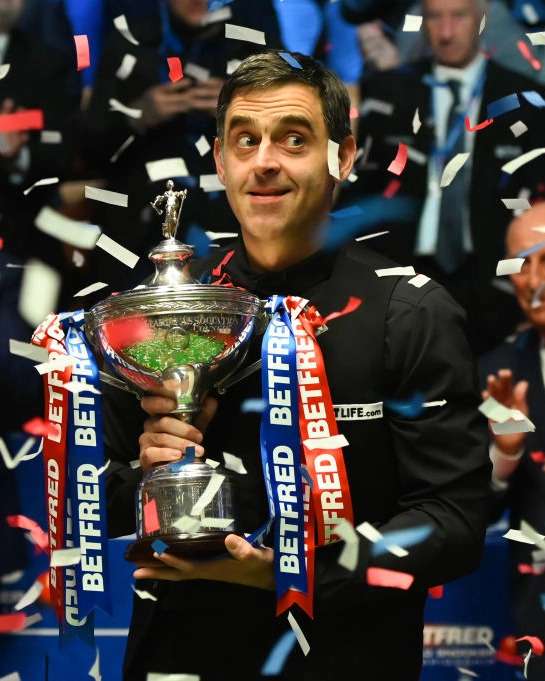
The Rocket Method teaches this level of decision-making from the perspective of Ronnie O’Sullivan, where cue-ball control is not a trick reserved for professionals but a standard that can be built through clear, purposeful practice.
Your next higher break will not necessarily begin with a harder pot. It may begin with a quieter choice: take the easier colour, leave the wider angle, and place the cue ball where the next shot feels inevitable.