A missed black is rarely caused by one bad cue action alone. More often, the player has rushed the picture, stepped into the shot without commitment, or changed their mind halfway through delivery. The best snooker pre shot routines remove that uncertainty. They give every shot, from a simple red to a tough long pot under pressure, the same dependable process.
A routine is not theatre. It is the practical bridge between seeing the shot and playing it. At its best, it protects your technique when your nerves, scoreline or opponent are trying to pull you away from it.
Why a pre-shot routine changes your scoring
Snooker asks you to make precise decisions before you ever address the cue ball. You must judge the potting line, choose the correct contact point, understand the cue-ball path, decide on pace and then commit to a delivery. Players who skip from decision to action tend to carry too many of those thoughts into the stance.
That is where tension arrives. The head moves to check the line again. The cue is steered. The backswing becomes hesitant. A routine puts each job in its proper place: think while standing, then trust the decision once you are down on the shot.
It also creates a valuable emotional reset. After a missed chance, a fluke or a poor kick, the table can feel personal. Your routine gives you something objective to return to. You do not need to force confidence. You simply need to complete the next process well.
The best snooker pre shot routines have one purpose
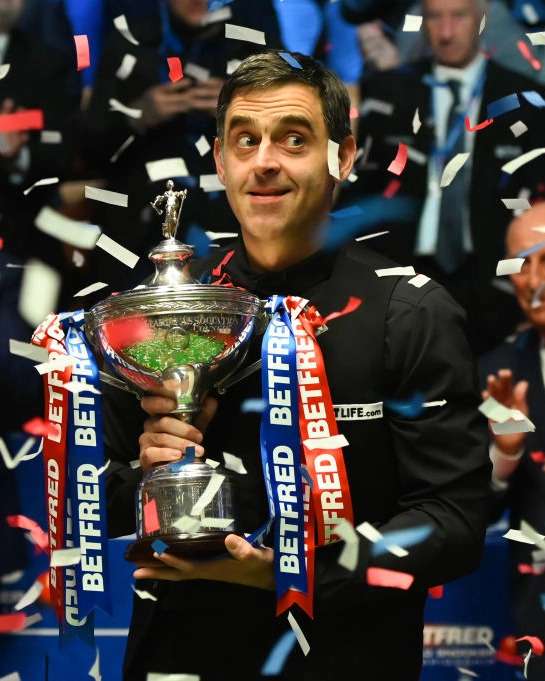
There is no single routine that suits every player. Ronnie O’Sullivan’s natural rhythm will not look identical to yours, and copying another player’s exact number of feathers is not the aim. The best routine is one that is clear enough to repeat, short enough to maintain for a full match and disciplined enough to hold up when a frame is on the line.
It should answer five questions before the cue is delivered:
- What is the potting line?
- Where must the cue ball finish?
- What speed and spin create that result?
- Where does my body need to be to cue straight?
- Am I fully committed to this shot?
If you are still answering any of these questions while your cue is moving back and forth, you are not ready to play. Stand up, reassess and begin again. That can feel slow at first, but it is far quicker than donating chances through indecision.
A championship-standard routine, step by step
Build the picture from behind the line
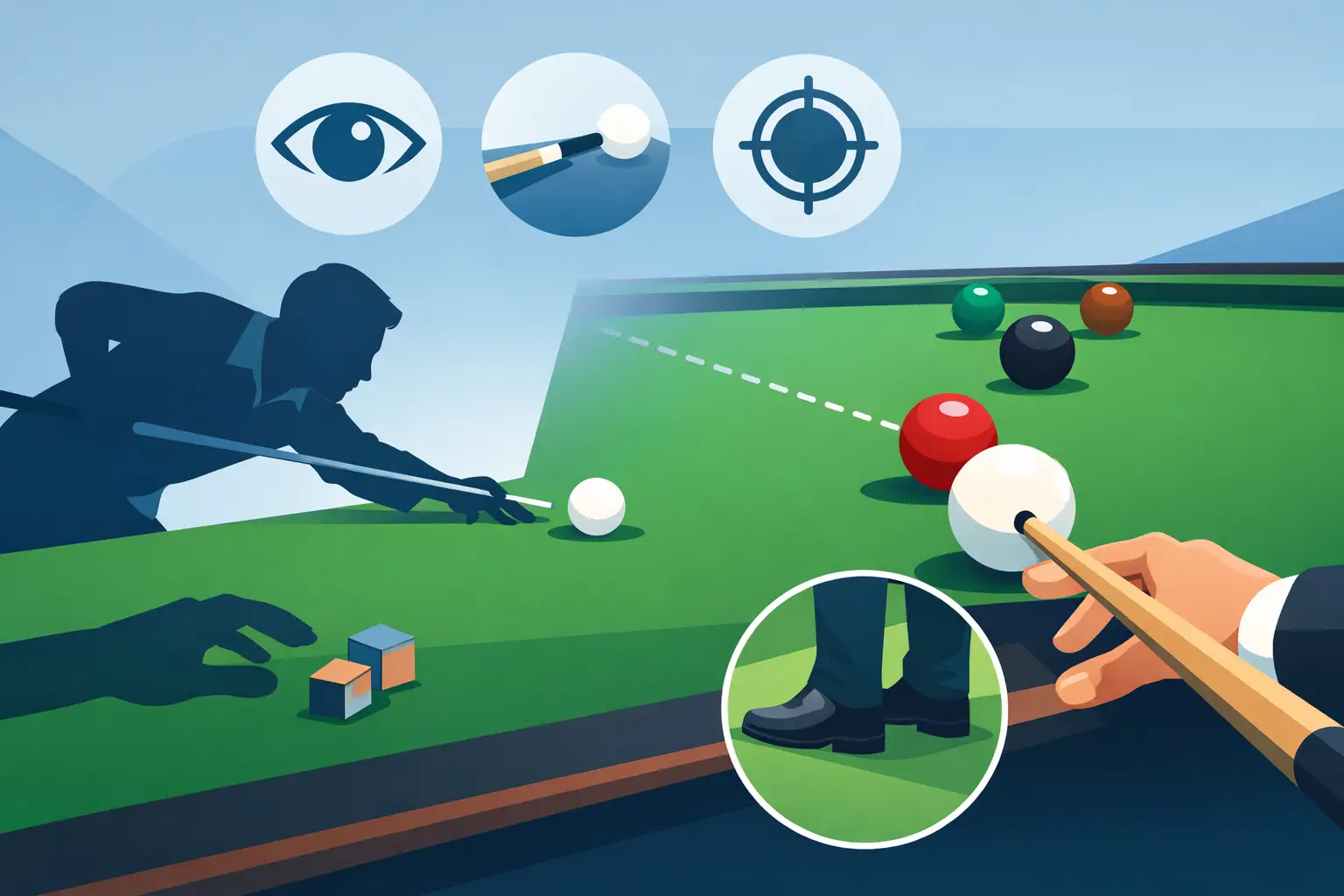
Approach the shot from behind the intended line of the cue ball. This is your viewing position, not merely somewhere you happen to stand. Take a moment to see the object ball entering the pocket and then work backwards to the cue ball.
Next, establish the cue-ball route. On a straightforward black off the spot, this may be almost automatic. On a red requiring check side, stun, or a controlled screw, give the route proper attention. Identify the danger as well as the desired position: a middle pocket, a touching ball, a blocking red or the risk of running too far.
Be decisive here. A player who cannot select a clear plan often defaults to a tentative cue action. Pick the percentage option, accept its margin for error and commit.
Rehearse the shot with your eyes and body
Before dropping into stance, make one or two relaxed rehearsal movements. These are not practice strokes in the air for their own sake. They help your body understand the line, pace and reach of the shot.
Your eyes should move naturally between the object ball and cue ball. Feel whether your feet will allow you to place the cue on line without stretching, twisting or crowding the shot. If the table layout demands an awkward bridge or a stretch, acknowledge it before you get down. The routine must adapt to the table, but the standards do not change.
Step in on line, not around it
A common amateur fault begins before the cue tip reaches the cue ball. The player steps into the stance from the side and then uses their upper body to search for the line. That makes a straight delivery harder than it needs to be.
Instead, bring the cue through the intended line as you lower into the shot. Let your bridge hand settle first, then allow your body to come down into a balanced, stable position. Your head should arrive where it can see the line clearly, without being forced or tilted.
There is no prize for getting down quickly. A composed entrance creates a composed shot. If you feel off balance, too close to the cue ball or unable to see the contact point comfortably, get up. Professionals do it. It is discipline, not weakness.
Use practice strokes to confirm, not to decide
Once down, make a consistent number of smooth practice strokes. For many players, three to five is enough. The exact number matters less than their purpose: to check that the cue is travelling freely, the tip is addressing the intended point on the cue ball, and your grip remains quiet.
Do not use endless feathers to negotiate with yourself. If doubt appears about the line, spin or pace, reset fully. If everything looks right, let the final backswing be unhurried and deliver through the cue ball with the same intention you saw while standing.
A useful standard is this: your final delivery should not look as though it is trying to save the shot. It should look like the natural finish of a decision already made.
Stay down and read the result
Remain still after striking the cue ball. Keep your head down long enough to feel the completion of the cue action, then watch the balls. This protects the strike, particularly on delicate stun shots and long pots, but it also makes practice more productive.
When you miss, diagnose the shot honestly. Did you misread the line? Choose the wrong pace? Lose your alignment while stepping in? Lift your head? A routine turns vague frustration into useful feedback. You can improve what you can identify.
Make the routine work under pressure
The real value of a pre-shot routine is revealed late in a close frame. Pressure does not usually erase ability. It changes tempo. Some players rush to escape discomfort; others become so cautious that the cue stops flowing.
Your answer is not to slow every movement artificially. It is to keep the sequence familiar. Take the same look from behind the shot. Choose the same line. Step in the same way. Use the same calm practice strokes. Let the routine control your pace rather than the score controlling it.
Breathing can help, especially after a tactical exchange or a missed opportunity. One controlled breath while standing behind the line is enough to reduce urgency. Avoid turning breathing into another complicated instruction. Snooker is demanding enough without giving yourself a checklist that overwhelms the shot.
Tailor the routine to different shots
Your core process should stay consistent, but the amount of analysis changes. A simple red with open position needs a brisker routine than a long red with the cue ball tight to the cushion. On an easy shot, overthinking can manufacture tension. On a difficult safety, rushing can hand over the frame.
Long pots deserve extra time behind the line. Confirm the true centre of the pocket, especially when the object ball is near a cushion where the visual picture can deceive you. Shots using side need a deliberate final check of tip position and speed. Touch shots demand even greater stillness, with no jab at the cue ball.
For break-building, include the next ball in your standing assessment. You are not only potting the current red or colour; you are creating a playable angle for what follows. That said, do not let position become so dominant that you compromise the pot. The ball in front of you remains the first job.
How to practise your pre-shot routine
Do not reserve routine work for matches. Build it during solo practice, even when you are potting the same black repeatedly. Start behind the line every time, walk in with purpose and reset after each shot. Repetition is what makes the process available when the pressure rises.
A productive drill is to place a red on its spot and play it into the corner from several distances. Give yourself a clear cue-ball finishing zone for the black. Score only shots where you complete the full routine and achieve both pot and position. This discourages casual practice and exposes where your decision-making breaks down.
You can also film a short session from the side. Look for changes in tempo, head movement, cue alignment and whether you remain down after contact. The routine should look repeatable, not rigid. You want calm authority at the table, not a performance that consumes your concentration.
The Rocket Method teaches snooker as a complete performance skill: cue action, tactical awareness and the composed habits that allow good technique to appear when it matters. A repeatable pre-shot routine is one of those habits. It is where preparation becomes execution.
Your next frame will still contain awkward angles, pressure pots and moments when the table refuses to cooperate. Meet each one with the same clear process. See it properly, decide with conviction, get on line and let the cue do the work.