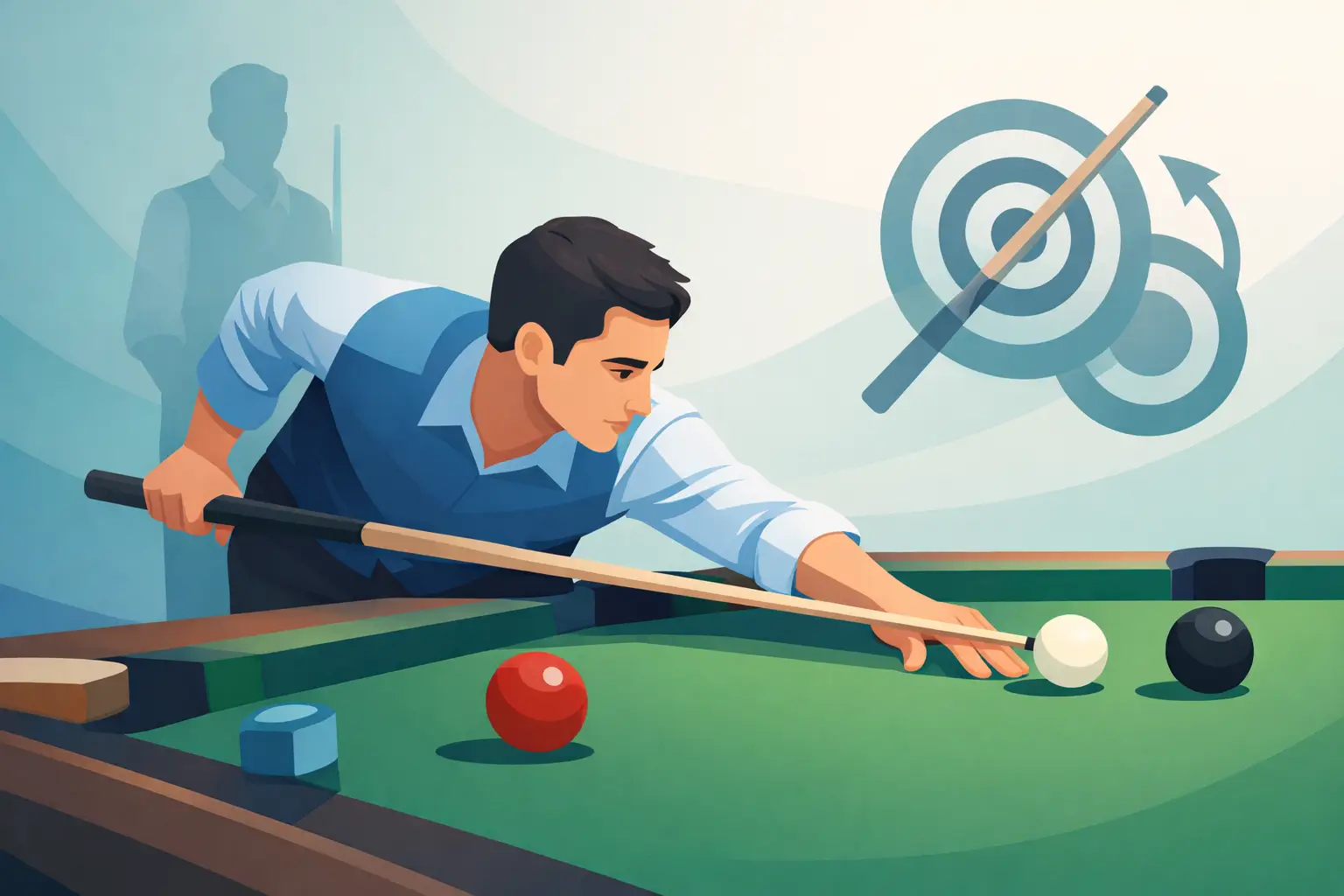
A stance fault rarely announces itself with a dramatic miss. More often, it shows up as a cue that feels different from one visit to the next, a shoulder that tightens on long pots, or a simple black that is missed despite looking perfectly on. If you are working out how to fix snooker stance, do not start by copying somebody else’s feet. Start by creating a position that lets your cue travel straight, your eyes see the line clearly and your body remain still.
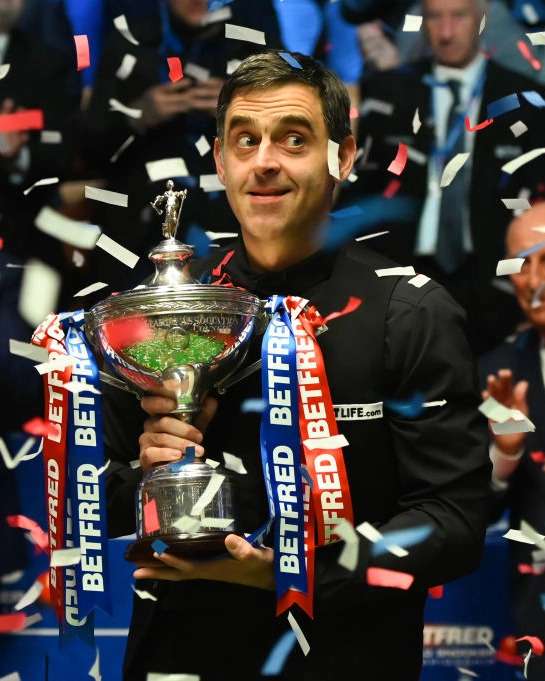
The best stance is not a pose. It is a repeatable platform for delivering the cue under pressure. Ronnie O’Sullivan’s game looks fluid because the fundamentals beneath it are stable. Your own stance should do the same job: remove unnecessary movement and let the cue do the work.
How to Fix Snooker Stance: Start Behind the Shot
Most stance problems begin before a player bends down. Rushing into the shot means the feet are placed reactively, then the upper body has to twist or reach to find the cue line. That is where inconsistency starts.
Stand behind the line of the shot first. See the line from the centre of the cue ball through the object ball to the intended pocket. Take your time here, particularly on long reds and shots where the cue ball is close to a cushion. Once you have chosen the line, keep it in your mind as you step in.
Your rear foot should normally come down first, close to the line of the shot. For a right-handed player, this is the right foot; for a left-handed player, it is the left. It does not need to be exactly on the line, but it should put your body in a position where the cue can pass freely beneath your chin without your hips or chest fighting it.
Then bring the front foot forward and slightly to the side. This creates a base rather than a tightrope. Many players step too narrowly, making the body sway during the cue action. Others step so wide that they cannot lower into the shot naturally. You want enough width to feel grounded, while still being able to move into the line without stretching.
Build Balance Before You Lower Down
A sound snooker stance feels balanced before the cue is even placed on the table. Your weight should be shared securely between both feet, with a slight natural preference towards the front leg for many players. There is no universal percentage to chase. If somebody can push you gently from the side and you feel unstable, your base needs attention.
Keep both feet planted through the shot. Lifting a heel, rolling onto the outside of a foot or shifting weight during the final delivery gives the cue more than one job to do. Instead of travelling straight, it has to compensate for body movement.
The knees should be soft, not locked. A slight flex allows you to lower your body and settle into the shot. Locked knees tend to push the hips backwards and force the player to bend from the waist, which can leave the head too high and the cue arm cramped.
Your hips and shoulders should feel open enough to give the cueing arm room. A common mistake is trying to stand too square to the shot because it looks neat. In reality, a more side-on position is often needed so the chest does not obstruct the cue and the rear arm can swing freely. The exact angle depends on your height, build and flexibility. Comfort matters, but only if it produces stillness and a straight cue action.
Let the Cue Find the Line, Not the Body
Once your feet are set, lower into the shot with the cue already travelling along the intended line. Do not bend down and then drag the cue sideways beneath your chin. That adjustment is a warning that your approach needs work.
As you come down, keep your head level and bring your chin close to the cue. Close does not mean pressed hard against it. The aim is to see along the cue clearly and keep the head still, not to force a position that strains your neck.
Players often blame their eyesight when they struggle to pot straight, but the issue is frequently a moving head or an inconsistent eye position. Your visual alignment needs to be repeatable. Some players are most comfortable with the cue directly beneath the centre of the chin; others need it fractionally to one side. Rather than chasing a fashionable position, test it on straight shots. The right position is the one that allows you to address the cue ball accurately and deliver the cue without steering.
Give Your Cue Arm a Clear Path
The rear arm is the engine of the stroke. In a settled stance, the upper arm hangs naturally and the forearm can swing like a pendulum. At the moment of contact, the forearm will often be close to vertical. It is a useful reference point, not a rigid law. Forcing the elbow into a position that feels unnatural can create tension and make the delivery worse.
Check whether your elbow has room to move without clipping your side or being pushed away from the body. If it is trapped, you may be standing too square. If it flares dramatically outwards, the rear foot may be too far from the line or your shoulder may be rotating through the shot.
Your bridge arm also needs to be settled, not merely stretched towards the table. A firm bridge hand and a relaxed but straight bridge arm establish the front of the stance. Avoid overreaching for the cue ball. When the bridge is too far away, the shoulders tend to drop unevenly and the head can drift off line. Move your feet closer instead of trying to solve distance with a longer reach.
A useful check is to get down on a straightforward shot and make several gentle feathering strokes. Watch for unwanted movement in the shoulder, head, hips or feet. The cue should move. Almost everything else should be quiet.
The Most Common Stance Faults
The most frustrating stance errors are usually subtle. They may work on easy pots, then appear when a match gets tense or the cue ball is tight to a cushion.
Standing too upright makes it difficult to sight along the cue and often leaves the player jabbing down at the ball. Lower gradually through the knees and hips until your head is close enough to assess the line with confidence.
Reaching across the shot occurs when the front foot is too far forward or the body is too far from the table. You may feel your bridge shoulder lifting towards your ear. Step closer, settle your bridge arm and let the torso lower naturally.
Twisting into position happens when the feet have not been placed from behind the line. The player gets down, realises the cue is not aligned, then rotates the shoulders to compensate. Stand up, reset and approach again. Do not practise a correction that will fail under pressure.
Moving on delivery is usually a balance issue rather than a cueing issue. If your head rises, your back foot turns or your body falls forwards as you strike the ball, reduce the effort in the shot and rebuild the base. Power comes from a controlled cue action, not from lunging at the cue ball.
Use Straight Shots to Test Your Setup
A straight black, spotted on its normal spot and played into a corner pocket, is one of the clearest stance tests in snooker. It exposes a poor cue line quickly. Start with short, gentle pots. Your only objective is to enter the stance the same way each time, feather smoothly and hold still after striking the cue ball.
Do not make ten changes at once. Choose one variable – perhaps placing the rear foot more consistently, or stepping a little closer to the table – and test it for a full practice session. A stance can feel strange simply because it is new. That does not mean it is wrong. Equally, a familiar stance is not automatically effective just because you have used it for years.
Use a mobile phone camera from the front and side if possible. From the front, look at whether your head and cue are consistently aligned. From the side, look for a stable base, a relaxed cue arm and any lift or sway through the strike. Video is honest in a way feel is not.
Make the Stance Repeatable Under Pressure
The final stage is not finding a comfortable stance in practice. It is being able to reproduce it on the last red of a close frame. That comes from a simple pre-shot routine: assess the line from behind the shot, place the rear foot, step into a balanced base, lower with the cue on line, then pause before the final delivery.
The routine should be calm, not slow for the sake of it. On routine pots it may take only a few seconds. On a difficult long red, a touch more care is worthwhile. The key is that the order remains the same.
The Rocket Method teaches snooker as a connected system, because stance, cue action, sighting and decision-making cannot be separated when the pressure rises. Build a stance that is yours, but judge it by championship standards: balance, clarity and repeatability.
Give yourself permission to stand up and reset whenever the shot does not feel right. One extra second behind the line is cheaper than a rushed miss, and every correct reset teaches your body what a dependable stance feels like.