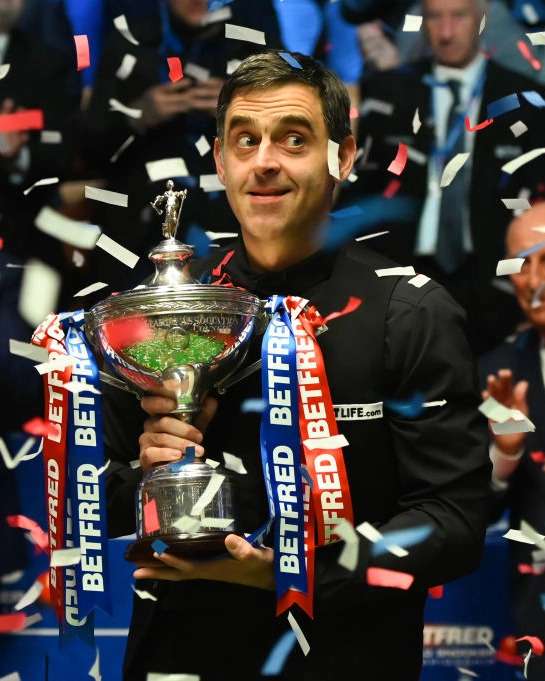

A snooker player can spend years trying to copy Ronnie O’Sullivan’s cue action and still miss the point. The real value of Ronnie O’Sullivan teaching style is not imitation for its own sake. It is the way he strips world-class performance back to decisions and habits that ordinary players can understand, rehearse and trust under pressure.
His game looks effortless because the work behind it is precise. That is the standard his approach sets: less noise, fewer gimmicks and a clearer route from the practice table to better matchplay.
Ronnie O’Sullivan Teaching Style Starts With Feel
Many players arrive at the table looking for a fixed set of positions. Where should the elbow be? How long should the pause be? Should the cue finish high or low? Those questions matter, but they can become a trap when they turn snooker into a checklist.
O’Sullivan’s teaching places technique in its proper context. A good cue action must be repeatable, but it must also allow a player to feel the shot, judge the pace and stay free enough to deliver the cue. He does not present the game as a collection of rigid poses. He treats it as a connected movement, from seeing the line to committing to the strike.
That distinction is crucial for amateurs. A player who is constantly thinking about six mechanical details rarely gives full attention to the object ball. By contrast, a player with a dependable pre-shot routine and a simple cueing thought can put their concentration where it wins frames: on the line, the contact and the required outcome.
This is not an argument against technical discipline. It is an argument for building technique that serves the shot. If a stance is stable but leaves you uncomfortable or unable to cue straight, it needs attention. If a grip is relaxed but your delivery is inconsistent, it needs work. The aim is not to look identical to a professional. The aim is to produce the ball consistently.
Simplicity Is a Performance Advantage
At elite level, snooker is already demanding enough. Every visit requires judgement of angles, pace, spin, risk, position and score. Adding unnecessary technical clutter makes the sport harder.
O’Sullivan’s approach values simple, usable cues. Settle over the ball. See the line. Deliver with purpose. Let the cue do the work. These ideas may sound straightforward, but they are difficult precisely because they demand honest repetition. Players often prefer a complicated tip to the quieter work of grooving a dependable action.
The lesson is not that every shot should be played the same way. Cue-ball control requires variation. It is that the player should make those variations deliberately, rather than allowing tension, indecision or poor preparation to make them by accident.
Build the Shot From the Balls Back
A defining feature of the Ronnie O’Sullivan teaching style is its emphasis on seeing the game clearly. Before the cue moves, the player has to understand what the balls are asking for.
That means reading the potting line, identifying the right contact point, choosing a sensible route for the cue ball and recognising when the percentage shot is not the most spectacular one. Great break-building is not merely the ability to pot difficult balls. It is the ability to keep creating manageable ones.
For club players, this can be a revelation. Too many missed chances begin with a successful pot followed by careless position. The red goes in, but the cue ball runs too far, finishes on the wrong side of the blue or leaves a thin angle that forces an unnecessary recovery shot. A break ends not because the player could not pot, but because the previous shot lacked a clear positional purpose.
A more professional way to practise is to name the destination before getting down. Do not just think, “pot this red”. Decide whether the cue ball needs to finish above, below, left or right of the next colour, and how much margin you have. Then select the pace and spin that give you the best chance of arriving there.
There is a trade-off. Chasing perfect position can make a player overplay the cue ball. In some situations, particularly when the table is awkward, a larger positional area is the smarter target. The best players are not trying to be perfect on every shot. They are trying to leave themselves a good next decision.
Pace Is Not an Afterthought
O’Sullivan’s fluency is often associated with speed around the table, but speed of play should never be confused with rushed play. His best work is built on early, decisive assessment. Once the picture is clear, there is no need for endless hesitation.
Pace is central to that picture. It determines how the cue ball reacts off cushions, how much side takes, whether a stun shot holds its line and how forgiving the positional result will be. A player who only practises potting has missed a large part of the game.
Try making pace the purpose of a practice session. Play familiar pots but set a clear cue-ball target. Use a small area rather than accepting any result on the right half of the table. Then change the required pace: soft screw, rolling follow, controlled stun and firmer run-through. The pot is the entry ticket. Cue-ball control is the real test.
Learn Through Repetition, Not Randomness
There is a major difference between hitting balls for two hours and training for two hours. The first can feel enjoyable while leaving weaknesses untouched. The second exposes the details that cost frames.
The teaching philosophy associated with O’Sullivan’s game respects repetition because repetition creates trust. When a player has played the same fundamental shot enough times with clear feedback, they no longer need to hope that it will work in a match. They have evidence.
That does not mean mindlessly repeating one straight blue until boredom takes over. Productive repetition has an objective. It might be delivering the cue without unwanted side, landing the white in a defined zone, recovering from an awkward angle or building a short, controlled clearance. The player should know what success looks like before the first ball is struck.
A strong practice block also needs pressure. Give yourself a consequence for a miss: restart the drill, reduce the score or play a final ball that must be made before you finish. Match nerves cannot be fully recreated alone, but standards can. The table will quickly reveal whether your routine survives when the shot matters.
The Mindset: Positive, Not Reckless
O’Sullivan is renowned for attacking snooker, yet his best attacking decisions are grounded in judgement. Positive snooker does not mean taking on every low-percentage long red. It means being clear about your choice and committing fully once it is made.
This is where many recreational players lose frames. They play a shot because it looks tempting, then decelerate through it because they are unsure. Or they choose safety without selecting a genuine safety objective. Both are half-decisions, and half-decisions rarely produce strong outcomes.
A better question before each difficult shot is: what does success need to look like? For an attacking shot, it may be a pot with the cue ball in a broad area for the next colour. For safety, it may be leaving the object ball tight on a cushion while sending the white to baulk. When the answer is specific, commitment becomes easier.
Confidence follows this process. It is not something a player talks themselves into after a poor run. It is earned through preparation, clear choices and the willingness to accept that even good shots can sometimes bring a bad result.
What Players Should Take to Their Own Table
The appeal of learning from a player of O’Sullivan’s stature is obvious, but the practical benefit lies in translating elite principles into your own game. Start with one area that is holding you back. It could be alignment, cue-ball pace, break-building choices or safety. Work on it long enough to measure a change, rather than changing your entire technique after one frustrating session.
Then make your practice resemble the snooker you want to play. If you want to build more 30s and 40s, practise the shots that keep a break alive: simple reds with controlled colour position, recoveries from less-than-perfect angles and the discipline to stop when a pot is not worth the risk. If you want to compete more effectively, include tactical scenarios rather than treating safety as an interruption between pots.
The Rocket Method brings these principles into a structured masterclass, with Ronnie O’Sullivan’s insight supported by detailed guidance from Alan McManus. For players who are tired of fragmented advice, that structure matters. It turns moments of inspiration into a proper training plan.
The finest lesson in O’Sullivan’s approach is not to play faster, flashier or more like someone else. It is to make each part of your game clearer, calmer and more purposeful until good snooker starts to feel natural.