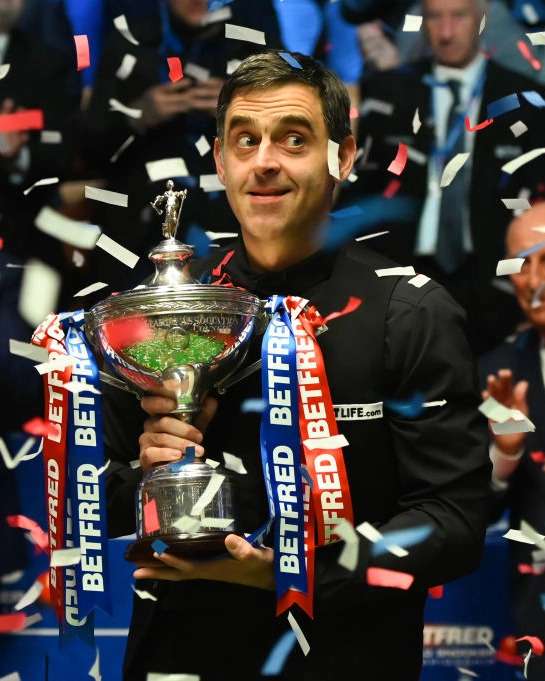
A straight red sitting over the middle pocket can look like the easiest ball on the table – until you miss it thick, thin or jaw it under pressure. That is why learning how to align snooker shots is not about finding a clever trick. It is about building a routine that makes the correct line clear before the cue ever moves.
The best players make alignment look automatic because they remove doubt early. They see the potting line, place their body around it and deliver the cue on that line with commitment. For club players, the same standard is available, but it demands patience and an honest look at the moments where the process breaks down.
How to align snooker shots from ball to cue
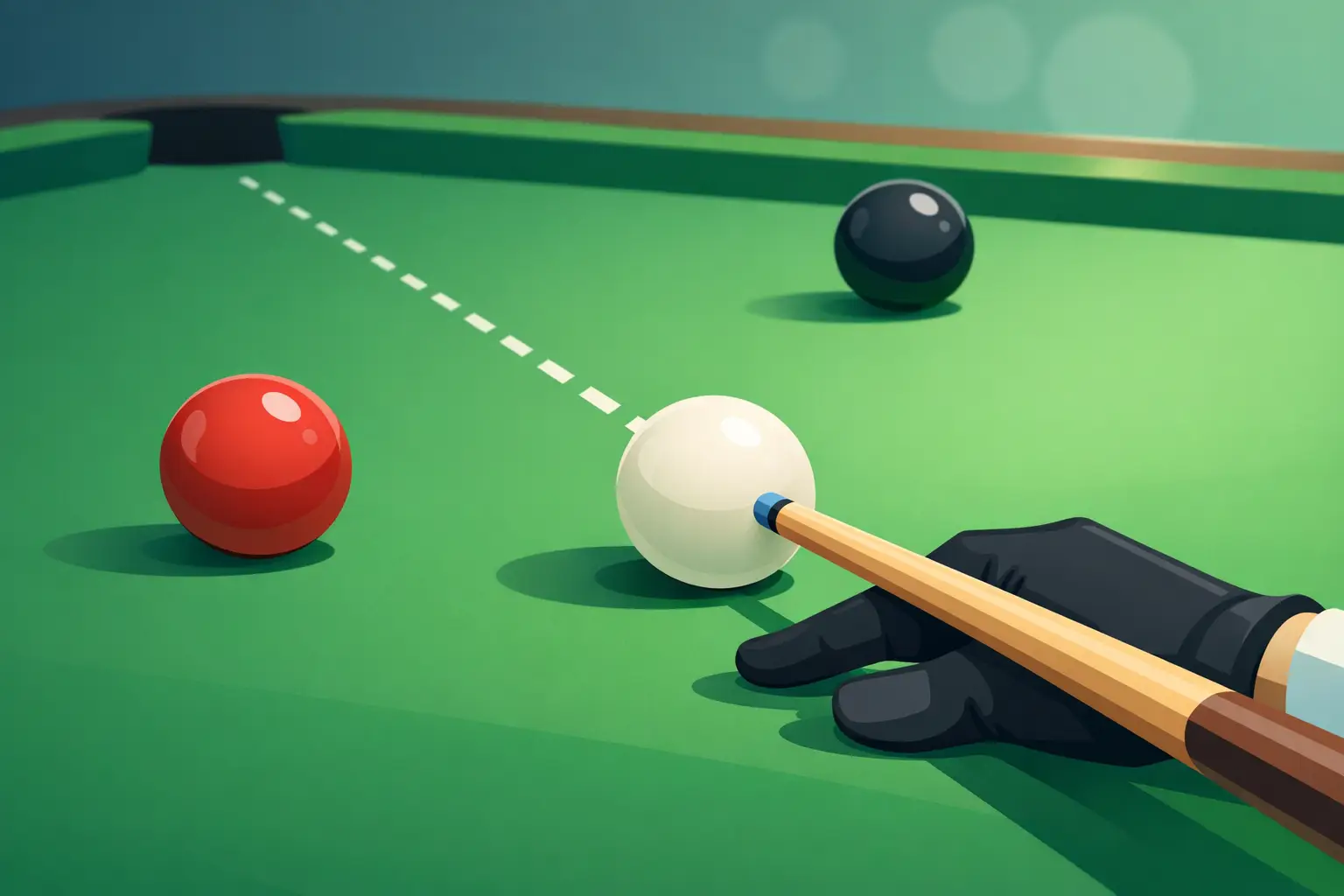
Every pot begins with a line from the object ball to the intended part of the pocket. That line determines the contact point on the object ball. Only once those two things are settled can you establish the line from cue ball to object ball.
Start behind the shot, where you can see the full picture. Pick a precise target inside the pocket rather than aiming vaguely at its centre. On a simple, straight pot, the centre is often appropriate. On a cut shot, particularly one played with pace or into a tight angle, your target may need to be a fraction away from centre to allow for the ball entering the pocket cleanly.
Now imagine a line from that target back through the centre of the object ball. The point where this line reaches the ball is the contact point you must strike. From there, trace the line back to the cue ball. This is your cueing line.
Do not rush down onto the shot because you think you have seen it. Take a second look. Ask one clear question: does the cue ball need to arrive at this exact point on the object ball for the ball to travel into this specific part of the pocket? If the answer is not immediate, stand up and reset. A few extra seconds before getting down are far cheaper than a missed opportunity and a lost visit.
See a line, not a collection of balls
A common amateur error is to focus on the object ball alone. The player walks in, gets low and attempts to steer the cue towards what looks right from the table. But a pot is a relationship between three fixed points: cue ball, contact point and pocket target.
Your job is to make those points feel like one line. This is why the view from behind the cue ball matters. It gives you perspective that disappears once your chin is close to the cue. Get the decision made while standing. When you are down on the shot, your only task is to confirm the line and deliver the cue straight.
Build your stance around the line
Good alignment can be lost during the approach. You may identify the correct line perfectly, then step into a stance that leaves your cue pointing slightly across it. The shot will feel awkward, and the usual response is to manipulate the cue with the arm. That is where consistency disappears.
Approach the shot with your cue already held on the intended line. As you lower into position, let your bridge hand land naturally beneath that line. Your back foot should provide a stable base, while your head settles so your eyes can look directly along the cue.
There is no single identical stance for every player. Height, build, flexibility and cue action all matter. What does not change is the requirement that the cue can travel freely and straight, without your body forcing it offline. If your chest, shoulder or grip hand feels cramped, do not try to fight through it. Stand up and adjust your position.
A useful checkpoint is your final feathering. When the cue moves back and forth, does the tip repeatedly pass through the centre of the cue ball on the line you selected? If it appears to sweep sideways, your stance or grip is interfering. Alignment is not only about where the cue begins. It is about whether it can remain true throughout the action.
Keep your head still, but do not freeze
A stable head gives your eyes a dependable reference point. If your head moves during the delivery, the line can appear to shift and tempt you into correcting mid-stroke. Keep your eyes quiet through the cue action and remain down long enough to watch the object ball begin its journey.
Stillness should not mean tension. A rigid jaw, raised shoulder or tight grip makes a free cue action harder. The elite look composed because their body is stable and their cue arm is able to swing. Seek that combination: firm foundations, relaxed delivery.
Straight pots reveal the truth
Straight pots are the purest test of alignment. They expose a cue that is not travelling straight, an eye line that is off-centre, or a player who lifts up before impact. Instead of treating them as routine balls, use them as technical evidence.
Set a red a comfortable distance from a corner pocket with the cue ball directly in line. Play the shot at a medium pace, with a plain centre-ball strike. Your intention is not merely to pot the red. Watch whether the cue ball stops cleanly or drifts to one side after contact. A drifting cue ball usually tells you that you have struck the object ball off-centre or delivered unwanted side.
Repeat the exercise from both sides of the table. Then gradually increase the distance. If you miss, resist the temptation to change three things at once. First check whether you chose the line properly. Next check whether you stepped into that line. Finally, assess the delivery. This sequence prevents random adjustments and gives your practice a purpose.
Cut shots require a fuller picture
On cut shots, players often underestimate how precise the contact point must be. The thinner the cut, the smaller the margin for error. A tiny change in cue-ball path can turn a confident pot into a miss to the near jaw.
Take your time selecting the pocket target. For a slow, natural-paced cut, aim for a route that lets the object ball enter with room either side. For a firmer shot, account for the way pace can alter the effective line into the pocket. There is no universal rule that says every ball should be aimed at the same point in every pocket. Table conditions, cloth speed, ball cleanliness and the angle all have a say.
Use the object ball as your reference, not the cue ball’s final path. Positioning matters, of course, but first earn the pot. Trying to force ideal position can lead to unwanted side and a less reliable contact. When a ball is difficult, choose the simplest cue-ball strike that achieves the next shot. Championship snooker is often built on disciplined percentages, not on making every visit spectacular.
Let the cue action prove your alignment
Once down on the shot, your practice swings should confirm the decision rather than reopen it. Feather with a consistent rhythm. Let your eyes move naturally between the object ball and cue ball if that is your established routine, then settle on the object ball for the final delivery if that helps you trust the target.
Avoid a last-second poke. A jabby stroke is often a sign that the player does not fully trust the line. Give yourself a measured pause at the back of the cue action, then accelerate smoothly through the ball. The cue should follow through on the intended line, with no attempt to twist the grip or guide the white towards the target.
This is especially significant under pressure. Nerves do not usually erase your ability to see a pot. They shorten your routine, tighten your hand and encourage you to rush the moment of delivery. Your answer is not to think harder. It is to return to the same visual and physical sequence you have practised when the table was quiet.
Practise alignment with intent
Randomly knocking balls around can be enjoyable, but it rarely fixes an alignment fault. Set aside part of each session for deliberate work. Begin with straight pots, then add half-ball cuts, thin cuts and long pots. Keep the cue-ball strike simple until the potting line feels dependable.
Film a few shots from directly behind the cue and from the side. You may notice that the cue is not as straight as it feels, or that your head rises during the strike. Video is valuable because feel can be misleading. The table tells the truth, and a clear recording helps you see it.
It also helps to judge progress by the quality of your routine, not just by your pot percentage. A well-aligned miss gives you something useful to examine. A fluked pot from a hurried, crooked approach reinforces the wrong habit. Demand a repeatable process and the results will become more reliable.
The Rocket Method teaches this standard of preparation through elite-level instruction: see the line clearly, build a stable address and trust a cue action that has been prepared properly. The goal is not to look polished for one shot. It is to create a method you can rely on when the match, the break and the next red all matter.
The next time a key ball presents itself, do not ask whether you fancy it. Stand behind it, define the line, step into it with intent and give yourself the best possible chance to let the cue do its job.