A red sits a few inches from the pocket, apparently straightforward, yet it rattles in the jaws. Most misses of this kind are not caused by a lack of talent. They come from a vague picture of the shot, a rushed final look, or a cue delivered somewhere other than where the player intended. The best snooker aiming methods give you a repeatable way to see the pot and then trust your action.
There is no single aiming system that replaces judgement. Snooker is played over changing distances, angles, cloth speeds and positional demands. But the strongest players do share a discipline: they identify the correct contact point, align their body to it, and refuse to let unnecessary thought interfere once they are down on the shot.
The best snooker aiming methods start with the line
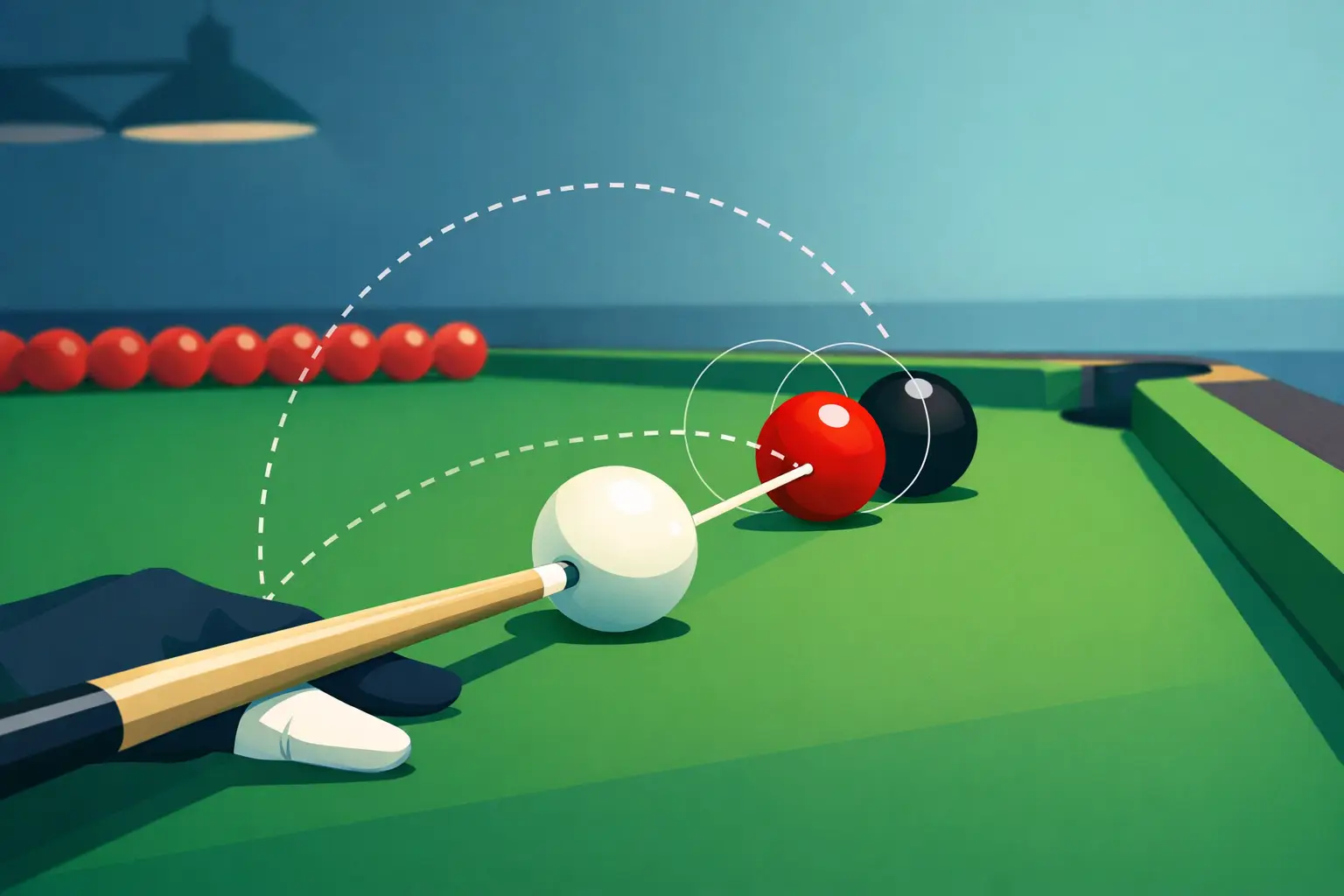
Every pot has a target line. Imagine a line running from the centre of the pocket through the centre of the object ball. For a centre-pocket pot, the cue ball must strike the object ball on the point that sends it along that line. That sounds elementary, but many players aim at the pocket rather than at the contact point on the ball.
Stand behind the cue ball and look through the object ball towards the intended pocket. Your first job is to see the object ball’s route clearly. Your second is to identify where the cue ball needs to arrive. When those two lines make sense in your mind, step into the shot without changing the picture.
This is the foundation of accurate potting. It works on a straight red, a thin cut to the middle and a long black because the geometry stays the same. What changes is the margin for error. A thick pot may accept an imperfect contact point; a long thin red will expose every fraction of a degree.
Centre-pocket thinking creates a useful margin
Do not merely aim to make the ball. Aim to send it into the centre of the pocket, especially when the ball is travelling at a controlled pace. This gives the shot its maximum usable margin and stops you from accepting a line that only works if the ball catches one side of the jaw.
There are exceptions. A positional shot may require you to use a side of the pocket, perhaps to change the cue ball’s escape route or hold an angle. That is a deliberate advanced choice. For normal practice, centre-pocket visualisation builds cleaner judgement and exposes whether your alignment is genuinely sound.
Ghost-ball aiming: useful, but do not overcomplicate it
The ghost-ball method asks you to picture an imaginary cue ball frozen against the object ball at the exact point of impact. The centre of your real cue ball must travel towards the centre of that imagined ball. It is one of the clearest ways to understand cut angles.
For beginners, it turns an abstract instruction such as “hit it thinner” into a visual target. For experienced players, it can be a valuable reset when a particular angle feels uncomfortable. It is particularly helpful on long pots, where a small error at contact becomes a large miss by the time the object ball reaches the pocket.
The limitation is that you cannot stand over the shot trying to hold a perfect imaginary ball in your mind. That usually creates tension and indecision. Use ghost-ball aiming while you are upright to establish the line, then let your pre-shot routine and cue action do the work.
Use the object ball, not the cue tip, as your reference
A common club-player habit is to stare at the cue ball and try to steer the cue tip towards a chosen point. The cue ball matters, of course, but the pot is decided by the contact on the object ball. Your visual priority should be the object ball’s line into the pocket.
As you settle into your stance, make a final confirmation that the object ball has a clear path to the centre of the pocket. Then return your eyes to the cue ball only when you are ready to deliver the cue through it. This sequence prevents the cue ball from becoming a distraction.
Different players favour different final-look patterns. Some look at the object ball last, others at the cue ball. The right choice is the one that produces a still head, a committed delivery and repeatable contact. Test both in practice, rather than copying a professional’s routine without understanding why it works for them.
Alignment is the aiming method players overlook
You can read the angle perfectly and still miss if your body is not aligned with the shot. Once you have chosen the cue-ball path, your cue, forearm and vision must be organised around it. If you are reaching across the line, twisting your shoulders or craning your neck to see the shot, you are asking your cue action to rescue poor set-up.
Approach the table from behind the line. Place your bridge hand on the intended cue path, lower yourself into the shot, and check that the cue is travelling freely beneath your chin. The head should be still and the eyes level enough to judge the line without strain.
This is where aiming becomes physical rather than theoretical. A player may say they “see” the right contact point, but if their cue points slightly elsewhere at address, the visual picture is irrelevant. Practise getting down on simple straight shots until your cue naturally arrives on line. Only then add difficult cuts and pace control.
Keep the delivery honest
A straight backswing and follow-through do not guarantee a pot, but they reveal whether your aim was right. If the cue is jabbed, dragged sideways or decelerated, you cannot learn much from the result. A miss might be poor judgement, poor alignment or poor delivery.
Give yourself a simple test: set up a straight blue into a middle pocket and play it softly enough that any side spin or unwanted swerve is obvious. If the ball repeatedly drifts to one side, inspect your cue action before searching for a more elaborate aiming system. Precision begins with an honest stroke.
Fractional-ball language can sharpen your judgement
Many players find it useful to describe cut shots in fractions: full ball, three-quarter ball, half-ball, quarter-ball and very thin. These are not exact measurements to calculate at the table. They are reference points that develop feel.
A half-ball hit is especially useful because it gives a recognisable visual relationship between the balls. From there, you can learn the difference between a slightly fuller and slightly thinner contact. Over time, the brain becomes better at reading the in-between angles that decide competitive frames.
Be careful not to turn fractions into rigid rules. The same apparent contact can behave differently when the cue ball is sliding, rolling, carrying side or affected by throw. Use fractional-ball aiming to train your eye, then allow experience to refine the final decision.
Side spin changes the picture
The cleanest way to improve your aiming is to begin with centre-ball striking. Side spin introduces cue-ball deflection, swerve and throw on the object ball. All three can alter the line enough to turn a confident pot into a miss, particularly at slow speed or over distance.
That does not mean avoiding side altogether. In serious snooker, side spin is essential for position, escaping cushions and widening cue-ball routes. It means acknowledging the trade-off. When the pot is difficult, first ask whether the positional gain really justifies adding another variable.
If you do use side, commit to the correction based on your own cue, cue action and table conditions. There is no universal amount of compensation. Practise the same shot with plain ball, then with running and check side, at several speeds. The table will teach you more than a diagram ever can.
Build aim through purposeful practice
Random potting feels productive because balls go in, but it rarely isolates the source of a miss. Choose one line and repeat it from both sides of the table. Begin with a short straight pot, move to a half-ball cut, then stretch the distance while keeping the pace controlled. Record where misses go: thick, thin, left, right, short of the pocket or into the far jaw.
That pattern matters. Consistently cutting balls too thick may indicate that you are under-reading the angle. Repeated misses to the same side on straight pots often point to stance or cue delivery. A useful practice session diagnoses, rather than merely entertains.
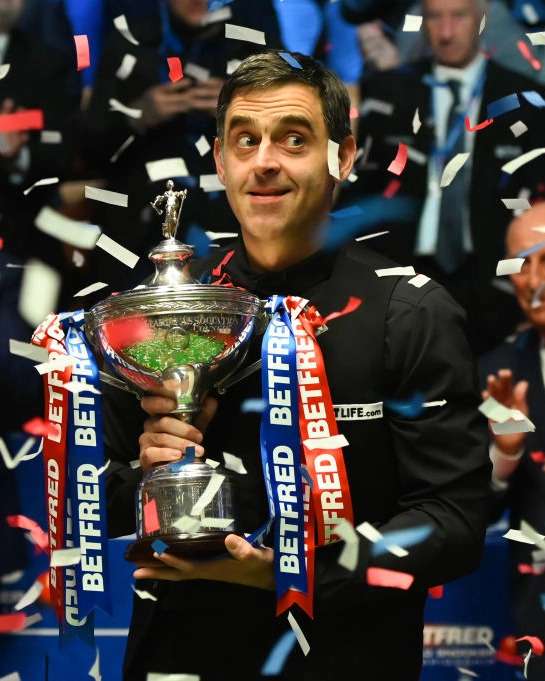
The Rocket Method places this kind of technical clarity within a wider standard of cueing, routine and match play. Elite aiming is not a trick seen once and forgotten. It is a trained process that holds together when the score is close and the table feels less forgiving.
When you next face a pot you should make, slow down before you get down. See the object ball travelling to the centre of the pocket, find the cue-ball line that creates it, and build your stance around that decision. Then deliver the cue without trying to correct the shot halfway through. That is where cleaner potting begins.