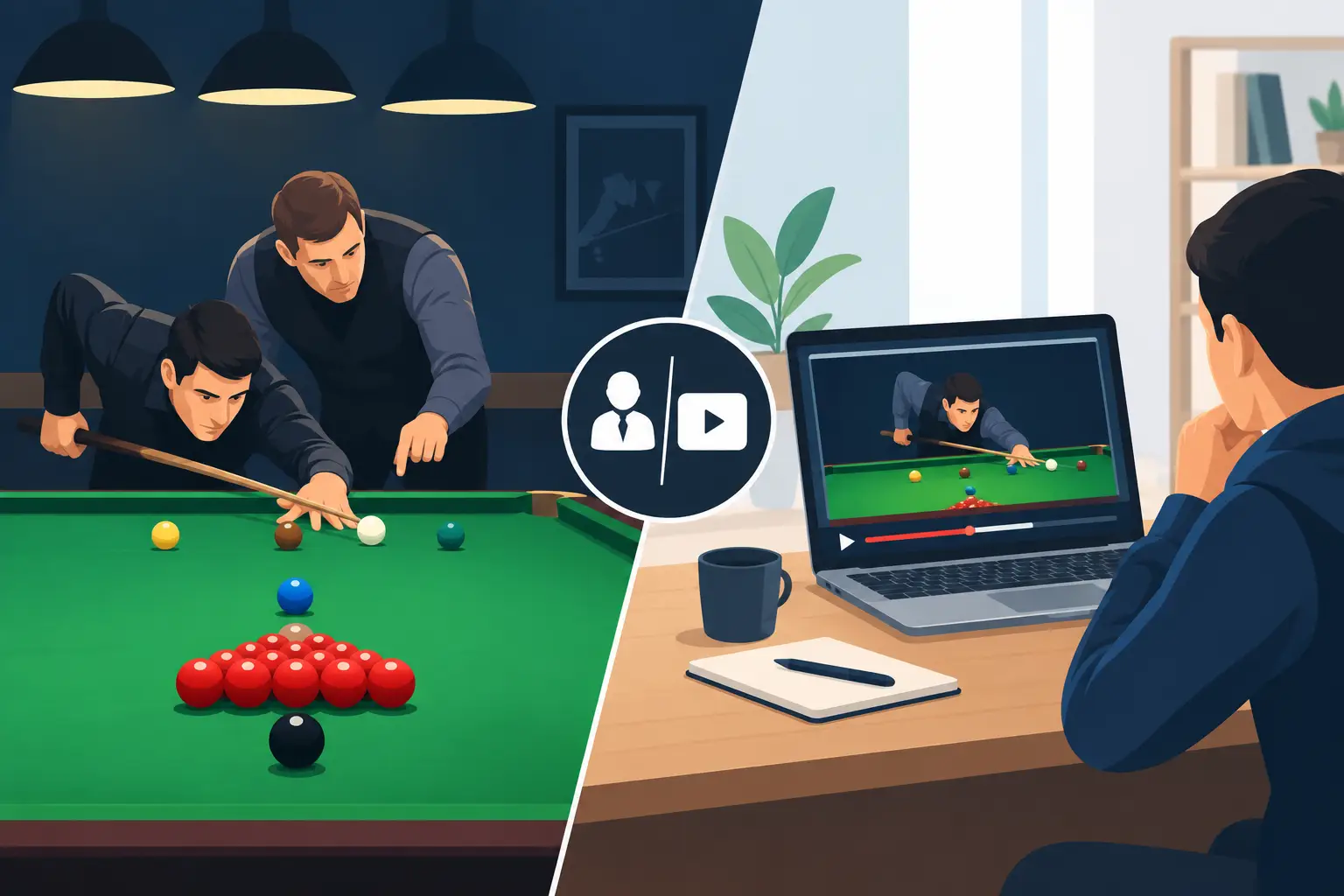
A missed black is rarely caused by a lack of videos. Most players already know where to find advice on cue action, stance and break-building. The real problem is knowing what to work on first, why it matters, and whether the next piece of advice supports or disrupts what came before it. That is the central difference in the snooker masterclass vs YouTube lessons debate.
YouTube has made snooker knowledge more available than ever. It can be useful, entertaining and completely free. But availability is not the same as progression. If you want your game to move beyond occasional good frames into repeatable, confident performance, the way you learn matters as much as the tips themselves.
Snooker masterclass vs YouTube lessons: the core difference
A YouTube lesson is usually designed to answer one question quickly. How should I bridge? Where should I look on the final backswing? How do I escape a snooker? That can be exactly what you need when a particular problem appears at the club.
A premium snooker masterclass is designed around a different outcome: building a complete player. Rather than treating stance, cueing, safety, shot selection and mentality as isolated topics, it shows how they operate together under pressure. You are not simply collecting advice. You are following a progression.
That distinction becomes more valuable as you improve. Beginners need clear fundamentals before they develop habits that are difficult to change. Experienced recreational players often need the opposite of more random information: they need to identify the few areas that are holding their whole game back.
The strength of YouTube: fast answers and broad exposure
There is a genuine place for YouTube in a serious player’s learning. A well-made clip can make a technical idea click in minutes. You can watch different players explain their routines, revisit a point before a match, or find demonstrations of shots that you rarely face.
It also gives you breadth. You may come across coaching styles, tactical opinions and practice ideas that expand how you think about the game. For a player with a specific question, a short video can be a sensible first stop.
The trade-off is inconsistency. One instructor may ask you to simplify your cue action while another encourages a new movement. One video may promote a practice drill that assumes a stable stance; another may diagnose a sighting issue without seeing how you address the ball. Neither piece of advice is necessarily wrong. It may simply be wrong for your current stage, or incomplete without the context around it.
There is also no natural endpoint. After watching ten clips, you may feel motivated, but you may not know whether you have improved your highest-priority weakness or simply spent an evening consuming snooker content.
Why structure changes practice
The best practice sessions have a purpose. They connect what you are doing on the table with the outcome you want in matches. This is where a masterclass earns its place.
A structured course establishes a sequence. First, you understand the foundations that create a dependable delivery. Then you learn how those foundations affect potting, positional play and shot choice. From there, tactical thinking and match temperament stop feeling like separate, mysterious parts of the sport.
That sequence matters because snooker is unforgiving of compensation. A player who cannot consistently deliver the cue through the intended line may try to solve the result with more aim. A player who repeatedly leaves difficult angles may blame their cue-ball control when the original shot selection was the issue. Random tips can treat the visible symptom. Structured learning gives you a better chance of finding the cause.
It also makes deliberate practice easier. Instead of arriving at the table with a vague intention to pot more balls, you can work on one part of your game, measure what happens, and return to it with a clearer understanding of the next step.
Elite insight is more than a famous name
Not every course with a recognisable face offers meaningful teaching. The real question is whether the instructor can explain decisions that ordinary players can apply.
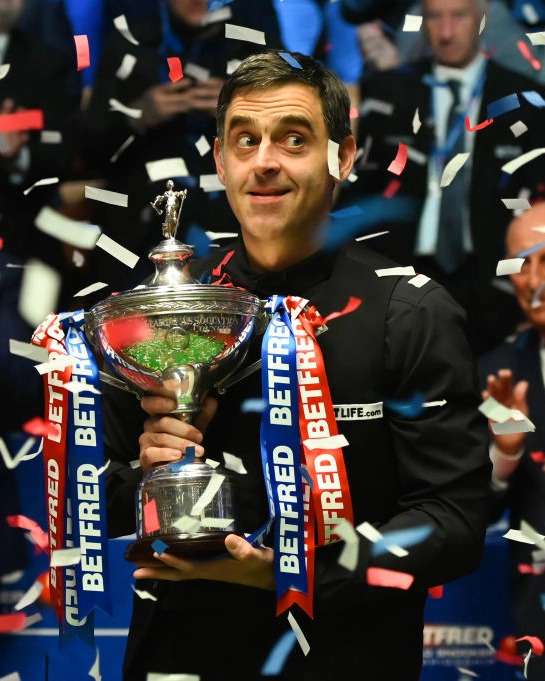
Learning from a player of Ronnie O’Sullivan’s stature brings a rare perspective: not just how the shots are played, but how the game is seen. The finest players recognise patterns earlier, choose percentages with greater clarity and stay committed when the table asks a difficult question. Those are qualities that do not always appear in a short, isolated demonstration.
A serious masterclass should translate that standard into practical lessons. The objective is not to copy a professional’s personality or pretend that every amateur can play with professional flair. It is to understand the principles behind elite performance and make better decisions with your own game.
The Rocket Method is built around that proposition: nearly 12 hours of instruction across 12 episodes, taught by Ronnie O’Sullivan and supported by Alan McManus. It is designed to give players a complete framework rather than another scattered library of clips.
Production quality can affect what you learn
This is not about cinematic polish for its own sake. In technical sport, clear filming can make instruction more usable. You need to see body position, cue alignment, timing and the relationship between player and table from angles that make the point unmistakable.
YouTube quality varies enormously. Some excellent coaches produce valuable lessons with simple equipment. Equally, a poorly positioned camera can hide the very detail you are trying to understand. Audio can be rushed, demonstrations may be brief, and the lesson may finish just as the important question arises.
A high-end masterclass has the opportunity to slow down. It can show the same principle from multiple viewpoints, pair demonstration with explanation, and place each lesson within the wider development of your game. That does not replace table time. It makes your table time more purposeful.
The limitation both formats share
Neither a masterclass nor YouTube can watch you play in real time. If your cue is drifting, your chin position is inconsistent or your grip tightens at the key moment, a filmed lesson cannot physically correct it. Players who need personalised diagnosis may benefit from working with a qualified coach alongside their digital learning.
That is not a weakness unique to online education. It is a reason to use it intelligently. Watch a lesson, take one clear focus to the table, film your own action if possible, and judge progress over several sessions rather than a handful of balls. If a persistent fault remains, targeted one-to-one coaching can add the feedback that video instruction cannot provide.
The advantage of a coherent masterclass is that it gives both you and a coach a shared framework. You are less likely to arrive saying, “Everything feels wrong,” and more likely to say, “My stance feels stable, but I lose the cue line on longer pots.” That is a more useful starting point.
Value is not the same as price
YouTube is free at the point of use, which makes it the obvious choice for casual interest. If you play a few times a year and want help with one shot, paying for a complete course may not make sense.
But free content can become expensive in another way: time. Hours spent searching, comparing contradictory advice and restarting your technique can cost more than a structured course that tells you where to focus. For committed players, the calculation is about whether the instruction helps create better practice, stronger match play and more enjoyment from every visit to the table.
A one-off payment with lifetime streaming also suits a game that develops over years. You may return to fundamentals after a lay-off, revisit safety play before a league season, or find fresh value in a lesson once your understanding has improved. That is different from racing through content before a subscription renews.
Which route should you choose?
Choose YouTube when you want a quick answer, a fresh drill, or a broad introduction to an unfamiliar part of the game. It is useful as a supporting resource, especially when you can assess the source and place the advice in context.
Choose a masterclass when you are tired of piecing your improvement together. It is the stronger option if you want authoritative instruction, a logical path from technique to tactics, and insight shaped by genuine championship experience. For clubs and groups, a structured course can also create a common standard for discussion and practice rather than leaving every player to follow a different feed.
The strongest approach is often not an either-or decision. Use short-form content sparingly for specific questions, but let one trusted, complete programme set the foundations. Snooker rewards commitment to the basics, clarity under pressure and the patience to improve one meaningful detail at a time. Give your practice that level of direction, and the table will begin to feel less like a test of luck and more like a game you understand.