
A cue that twists during the strike can make a straightforward pot feel uncertain. You may see the butt turn in your hand, feel the cue shift against your bridge, or watch the cue ball leave with unwanted side. Learning how to stop cue twisting is not about forcing the cue to stay straight. It is about removing the tension, imbalance and unnecessary movement that make it turn in the first place.
For serious improvement, treat this as a cue-action issue rather than a problem to solve shot by shot. A stable delivery gives you more than better potting. It gives you reliable cue-ball control when the score matters.
Why your cue twists on the final delivery
Cue twisting rarely has one cause. More often, it is the visible result of several small faults arriving at the same moment: a grip that tightens, a wrist that turns, a bridge that is unstable, or a backswing that comes away from the intended line.
The most common source is an overactive grip hand. Many players begin their cue action reasonably well, then squeeze the butt as they come through. That squeeze encourages the fingers, wrist and forearm to rotate together. The cue does not travel freely through the line of the shot. It is steered.
Pressure creates another version of the same problem. When a black off its spot looks important, the natural instinct is to make sure of it. Unfortunately, trying to guide the cue at impact usually produces a twist. The best players do not attempt to place the cue ball through force. They deliver the cue cleanly and let the line do the work.
Equipment can contribute, although it is less often the main culprit. A badly warped cue, a ferrule that is loose, an uneven tip or a cue that feels poorly balanced in your hand can exaggerate movement. Before rebuilding your technique, roll the cue gently on a flat surface, inspect the tip and make sure nothing is physically loose.
How to stop cue twisting: build a quieter grip
Your grip should support the cue, not control it. Hold the butt lightly enough that the cue can move through your fingers without resistance, while still feeling secure. For most players, the cue sits across the fingers with the thumb and forefinger forming a relaxed channel around it.
There is no single grip pressure that suits everybody, but the principle is clear: pressure should stay consistent from address to follow-through. If your knuckles whiten, or the cue leaves an imprint in your fingers after a session, you are almost certainly holding too tightly.
Start by checking where the butt rests. A cue held too deeply in the palm makes wrist movement more likely. Aim to let the handle sit mainly through the fingers. The wrist should feel neutral, neither cocked inward nor pushed outward. From there, allow the cue to swing from the elbow as naturally as possible.
Do not make the mistake of opening your hand completely. A loose grip is not a careless grip. You still need enough contact to keep the cue balanced and aligned. The objective is quietness: no last-second squeeze, no flick of the fingers and no attempt to turn the cue through the ball.
Let the elbow create a pendulum, not the wrist
At the address position, your forearm should be close to vertical on the line of the shot. During the delivery, the elbow acts as the pivot and the forearm swings through. If the wrist is trying to add power or correct the direction, the cue will often rotate.
Film yourself from directly behind the shot if possible. Look at the cue butt, not only the cue tip. A cue can appear to strike the cue ball cleanly while the rear of the cue is describing a small arc. That is often where the unwanted side and inconsistent contact begin.
The cure is not to freeze your arm. A stiff arm is usually a tense arm, and tension creates its own compensations. Instead, rehearse a smooth pendulum action at half pace. Feel the cue travelling through the same channel on the backswing and the follow-through.
Make your bridge hand stable enough to trust
A twisting cue is sometimes blamed entirely on the grip hand, but the bridge hand deserves equal attention. If the bridge is loose, too low, too narrow or positioned on an uneven part of the cloth, the shaft can move sideways before you have even started the delivery.
Set the bridge firmly on the table, with the hand relaxed but planted. Your bridge should give the cue a clear, repeatable groove. On an open bridge, keep the thumb raised enough to form a defined channel. On a closed bridge, avoid clamping the shaft between finger and thumb. Either bridge can work well, provided the cue glides rather than scrapes.
Bridge length matters too. A very short bridge can make the cue feel restricted and encourage a jab. A bridge that is too long may leave you feeling unsupported. For standard stun and screw shots, choose a length that allows several smooth practice strokes while keeping the cue stable. Adjust when the shot demands it, but do not change it randomly because you are nervous.
Fix the setup before you address the cue ball
Poor alignment asks your hands to perform a rescue job. If your body is not settled on the line of aim, you will often twist the cue in an unconscious attempt to correct the path during the final stroke.
Choose the shot line while standing. Step into it with your back foot placed on that line, then lower yourself into the stance without shifting your head or shoulders sideways. Once down, give yourself time to check that the cue is pointing where you intended before beginning the practice strokes.
Your head position should let you see the line clearly, but avoid crowding the cue. When the chin, shoulder or chest interferes with a free backswing, the cue has nowhere to travel except off line. A comfortable stance is not a luxury. It is the platform that allows a straight cue action to happen without conscious correction.
If you consistently twist on shots close to a cushion, do not simply blame the awkwardness. Use a rest when the shot demands it, alter your bridge carefully and accept that some positions require a shorter, more controlled action. Championship snooker is built on choosing the right solution, not forcing your preferred one into every situation.
Three drills that expose cue twisting
The most valuable drills are not glamorous. They make the cue path visible and teach your hands what a clean delivery feels like.
First, use the line-of-balls drill. Place the cue ball near the baulk line and aim straight up the table towards the blue spot, with no object ball involved. Deliver the cue ball firmly enough for it to return towards your tip. If it comes back consistently to the cue, your cue action is travelling straight. If it returns to one side, resist the urge to correct it immediately. Notice whether your grip tightened or your wrist turned.
Next, play a series of centre-ball stun shots to a simple, straight pot. Keep the cue ball and object ball far enough apart that you need a proper follow-through, but not so far that the shot becomes a test of nerve. Your goal is a dead, controlled cue ball after contact. Side-spin, an unexpected roll or a cue ball that drifts from the line can reveal a twisting action.
Finally, practise slow-motion deliveries without striking a ball. Set up as though playing a routine pot, make three calm feathering strokes, pause at the end of the backswing, then deliver through the imagined cue ball. Hold the finish for two seconds. This pause can reveal whether you are gripping harder or rotating the wrist as you accelerate.
Use these drills in short, focused blocks. Twenty mindful deliveries are worth more than an hour of repeatedly hitting balls while the same tension remains unnoticed.
Do not confuse power with force
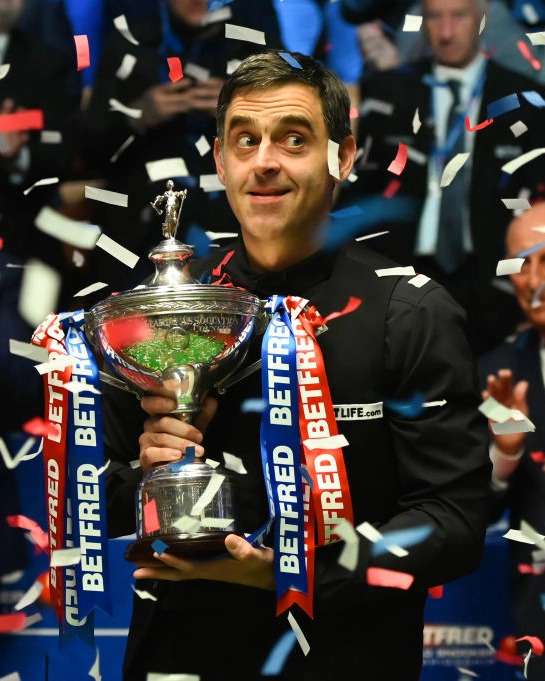
Cue twisting often appears when players try to generate extra pace. Yet good power comes from cue acceleration, timing and a full follow-through, not from a violent grip. Ronnie O’Sullivan’s game has always demonstrated that the cue can travel with authority while the player looks composed.
For a powerful screw shot or a long red, lengthen the cue action where the table allows it. Stay down, give the backswing room and accelerate smoothly through the cue ball. If you feel the need to snatch at the shot, reset. A rushed strike may occasionally work, but it will not hold up across a match.
The Rocket Method teaches the technical details that turn this feeling into a repeatable standard: a calm setup, a purposeful routine and a cue action built to stand up under pressure. That is where consistency begins.
The next time your cue twists, do not chase the result of the shot. Reset your grip, settle the bridge, return to the line and make one unhurried delivery. Every clean strike is evidence that your technique can be trusted.